

|
On this page I have written articles about using 16mm in today's world. My monographs, articles and stories are being continually updated and added and as such this section is constantly growing, click the links or simply scroll down. Contents
Double 35mm format It is interesting
to consider the idea of a Double 35mm format, particularly because,
as far as I have researched, it was never suggested, proposed
or developed. On paper, however, the concept seems remarkably
straightforward. The standard silent-era movie 35mm frame, using
the conventional 4-perforation pull-down, measures approximately
25mm × 18mm. By adopting a 2-perforation movement we are reducing the height of the frame size from 18mm to 9mm and so we get a very wide image, but if we then divide this wide image in half we can fit four smaller images in our conventional silent-era 35mm frame, with each image around 12.4mm × 9mm. For this the film would have to have a 2-perf pull down and be exposed in two passes, in much the same way as Standard 8mm operated. From both a manufacturing and economic perspective, the idea appears logical. It would reduce film consumption significantly while still making use of existing 35mm stock and processing infrastructure. The closest historical comparison is Standard 8, also known as Double 8 or Regular 8. Introduced by Kodak in 1932, Standard 8 cleverly uses four images out of one 16mm frame, and it economises on film by using 16mm stock. The camera exposes one half of the film's width during the first run, then the reel is then turned over, and the other half of the film is exposed. After processing the film was slit down the centre and joined end-to-end, producing an 8mm-wide film with twice the running length. These days with negative film where film is usually scanned most labs don't slit the film and leave it as a 16mm film strip with two rows of exposures.It is an elegant solution, and it dramatically reduced costs for amateur filmmakers before Super 8 arrived, while allowing manufacturers to continue producing film from an established format.
Yet despite the apparent practicality of the idea, Double 35mm never emerged. The answer to this lies not only in economics but in the historical context of motion-picture film during the early twentieth century. Before dedicated amateur formats existed, some entrepreneurs and small companies were already supplying film to the enthusiasts and home-movie makers by taking standard 35mm stock and slitting it in half to create 17.5mm film. This format was not rigidly controlled or standard and was somewhat unregulated, it appeared during the 1900s up to the early 1920s and demonstrated that there was considerable demand for smaller and cheaper gauges. However, this practice caused concern among both Kodak and regulatory authorities. The issue was not simply one of market control, but at the time, virtually all 35mm motion-picture film was manufactured on a nitrate base. Nitrate film possesses excellent photographic qualities, but it is highly flammable and chemically unstable. It can ignite easily, burn with extraordinary intensity, and is difficult to extinguish once alight. Cinema fires were common and were caused by nitrate film which was a genuine hazard throughout the first half of the twentieth century. The prospect of large quantities of nitrate-based 35mm film finding their way into private homes was therefore viewed with understandable alarm. Kodak's response was to create an entirely new amateur format rather than adapt existing 35mm stock. The result was 16mm, introduced in 1923. This was revolutionary because it was designed from the outset for non-professional use and, crucially, was manufactured on cellulose acetate safety film rather than nitrate stock. For the first time, amateur filmmakers had access to a format that was compact, economical, and, most importantly, safe to use and store in the home. Once 16mm had become established, the need for a format based on 35mm largely disappeared. The introduction of Standard 8 in the 1930s reduced costs even further, and later formats such as Super 8 made amateur filmmaking more accessible still. In this environment, a Double 35mm system would have offered little advantage. It would have required specialised cameras and projectors while remaining tied to a film gauge associated with professional cinema and, historically, with nitrate stock. Looking back, I suppose Double 35mm remains one of those fascinating "what if?" ideas in film history. Technically, it would have been entirely feasible, and its operating principle was later proved by Standard 8. However, technological development is not driven solely by engineering possibilities. Safety concerns, market forces, manufacturing priorities, and the existence of increasingly successful small-gauge formats all worked against such a system. As a result, while Double 8 became one of the most successful amateur film formats ever created, while Double 35mm remained an intriguing concept that, for good reasons, never progressed beyond a theoretical possibility. What makes the idea of Double 35mm particularly fascinating
to me is that, although it never existed historically, I can
see the practical logic behind it more clearly than ever. In
fact, it was my own experimentation that led me to appreciate
just how sensible such a format could be in the current climate. Recently, I modified my 35mm Eyemo camera to operate with a two-perforation pull-down. The original motivation was simple enough: to reduce film consumption. Anyone shooting 35mm film in 2026 is acutely aware of the cost of rawstock, processing, and scanning, so any method of increasing running time from a given roll of film is attractive. The conversion worked well and immediately halved my film usage, but I discovered another issue. The resulting frame measures approximately 24.2mm × 9mm and it is an extremely wide image. While this format certainly has a cinematic aesthetic and appeal, I find it too panoramic for much of my work. And so, this prompted a different idea, instead of simply accepting
the wide two-perf frame, I thought why not take the concept
further? What if the aperture's width in the camera was reduced
and effectively cut in half, creating a 2-perf image that wasn't
wide on the 35mm film width, much in the same spirit as the
Double 8 principle? Rather than using the entire width for a
single wide frame, the film could now accommodate two smaller
frames, increase efficiency while retaining many of the advantages
of 35mm film. The more I thought about it, the more logical it seemed. A smaller frame would mean lower film costs, since more images could be obtained from the same length of stock. Equally important, the reduced image size would allow the use of potentially much smaller optical systems. My camera could become lighter, more compact, and more economical while still offering image quality beyond what traditional amateur gauges could achieve. One of the most interesting aspects is that the resulting frame size remains larger than 16mm. This is important because image quality is not determined by film width alone but by the actual image area being exposed. Even with the reduced frame of Double 35, there is still more exposed negative area available than on standard or Super16mm film. In practical terms, this means finer grain, greater detail, and a more robust image when scanned or projected. Curiosity eventually gave way to experimentation, and I decided to test the concept for myself. After modifying the camera and creating the necessary aperture arrangement, I shot a roll of Foma BW film to see whether the theory would translate into practice. The results genuinely surprised me. Not only did the format deliver the economy I had hoped for, but the image itself possessed a character and quality that exceeded my expectations. There was a clarity and richness to the footage that reminded me why 35mm became the professional standard in the first place, yet it was achieved with a frame size and film consumption much closer to that of a small-gauge format. Seeing those images for the first time made me wonder whether the industry may have overlooked a genuinely viable intermediate format. Historically, there were sound reasons why Double 35mm never emerged, particularly the safety concerns surrounding nitrate film and the success of 16mm and later Standard 8. Yet viewed purely from a technical standpoint, the concept makes sense. It occupies an intriguing middle ground: more economical than conventional 35mm, larger and higher quality than 16mm, and capable of using smaller lenses and more compact cameras. Perhaps that is why the idea continues to intrigue me. It is one of those rare cases where a forgotten path in technological history turns out to be surprisingly practical when revisited with modern materials and modern thinking. Having now built and tested a working version, I no longer see Double 35mm as merely a historical curiosity or an interesting theoretical exercise. I see it as a format that works with stunning results I and can see that it may have far more potential than anyone realises. Éclair
ACL 16mm camera Part of the reason is simply timing and industry momentum. The Arriflex SR and Aaton systems were hugely dominant in television, documentaries, and commercial production from the late 1970s through the 1990s. Rental houses stocked them in large numbers, film schools trained students on them, and entire crews built their workflows around them. Over time, they became the cameras people automatically associated with "professional" 16mm filmmaking. The Éclair camera company, on the other hand, ceased to exist in the mid 1980s and no matter how good their cameras were they slowly slipped out of everyday conversation. From my perspective, I have come to feel that the Éclair ACL is actually a more relevant camera for filmmakers today than many of the more famous 16mm cameras. And that's not just nostalgia talking, it comes from spending time with this camera, maintaining it, modifying it, and learning how adaptable it really is. One of the first things you notice is its size and footprint. The ACL is incredibly compact for a professional 16mm camera. With its 200-foot magazine, it stays small and balanced in a way that feels surprisingly modern. When you're operating it, especially handheld, it doesn't feel like you're carrying a heavy piece of machinery it feels closer to a tool built for movement and experimentation. For filmmakers working today, especially those shooting independently, that smaller, lighter setup really matters. But what truly makes the ACL special to me is how serviceable it still is today. Many classic 16mm cameras like the Arriflex SR or the Aaton XTR are truly brilliant machines, but they rely heavily on bespoke and complex electronics and systems that are increasingly difficult to repair, making them very expensive cameras to maintain. The ACL is different, because its design is radical, ahead of the times as its fundamentally modular. When you open it up or work on it, you realise how simple the innards are and how much of the camera is mechanical and straightforward. The electronics are minimal and relatively simple, which means there's far less standing between the camera and a functioning repair. Even the reflex system is unique. Instead of the delicate spinning mirror shutter used in the Arriflex and Aaton cameras, the ACL uses a unique pendulum mirror system for the viewfinder. It's such an elegant piece of engineering that design allows for a shorter flange focal distance, and this ultimately opens the door to using smaller and more affordable lenses, particularly C-mount lenses. For filmmakers today, especially those working outside big-budget productions this flexibility is incredibly valuable. Then there's the motor system which sits externally, this might seem like a small detail, but it completely changes how maintainable the camera is. If something goes wrong, you can swap the motor rather than tearing the entire camera apart. And the fact that new crystal-sync motors are being produced in 2026 says a lot about how alive the ACL ecosystem still is. The modularity goes even further than that. The viewfinder, batteries, grips, and magazines can all be swapped and adapted. As an operator, that makes the camera feel less like a fixed piece of vintage equipment and more like a platform you can build around. From my own experience, one of the most rewarding parts of working with the ACL has been experimenting with the lens mount and figuring out how far I could push its adaptability. Because the camera has such a short flange distance, it gave me the opportunity to try something a little unconventional: I adapted a Micro Four Thirds mount onto my ACL. This single modification has opened up a whole new world of possibilities and now I could use a wide range of affordable Micro Four Thirds cinema lenses, which dramatically broadened the creative options available to me without needing to invest in expensive, traditional cinema glass. It completely changes how accessible the camera felt as a working tool. Projects like this are what make the camera so engaging for me. It's not just about using the ACL as it was originally designed, but about exploring how it can evolve with the way I like to shoot. For instance, I went a step further and built a custom 100-foot magazine so the camera could accept standard 100-foot daylight spools of 16mm film. The modification made the entire setup noticeably smaller and more portable. It's perfect for situations where I want to travel light, shoot quickly, or work in a more spontaneous way without carrying larger magazines and extra equipment. There's something deeply satisfying about making those kinds of changes yourself. When you modify a camera like this, you start to feel that it's truly tailored to the way you work rather than forcing your workflow to adapt to the camera. Each adjustment whether it's the lens mount, the magazine, or some small mechanical tweak, makes the camera feel more personal and more capable. That sense of adaptability is exactly why I think the ACL still matters today. To me, it isn't just an interesting historical artifact from the golden age of 16mm filmmaking. It's a camera that filmmakers can still live with, repair, modify, and genuinely shape around their own needs. When I'm operating it, I never feel like I'm handling a fragile museum piece that needs to be preserved behind glass. Instead, it feels like a practical tool and one that still has plenty of life left in it. In a time when many film cameras are becoming increasingly
difficult to maintain or adapt, the ACL stands out quietly,
but clearly. It represents something that's becoming rare: a
professional 16mm camera that filmmakers can still truly make
their own. Working with it feels less like preserving the past
and more like continuing a living tradition of craftsmanship,
experimentation, and hands-on filmmaking.
The Kodak K100 June 2026
With such a reputation, I didn't expect much when I first encountered the Kodak K-100/T. My initial assumptions about this camera turned out to be completely wrong, as it is different, I think it's is a very underrated 16mm camera. For me, it proves that while Kodak may not be remembered as a great camera manufacturer, they got it right with some of their earlier cameras and with this camera they certainly created something honest, durable, and genuinely inspiring to use. It feels like it comes from a different philosophy altogether, it was targeted at the documentarist, the semi-professional and the 'lone' filmmaker. Unlike Kodak's plasticky Super 8 cameras with limited controls and clunky ergonomics, this 16mm camera is unapologetically utilitarian. It doesn't try to impress you with features, but it earns respect through how solid and straightforward it is. The all-metal construction immediately sets it apart. It's heavy, durable, and the design was popular for education, experimentation, and longevity, this makes sense especially since it was popularly used in film schools across the USA. This isn't a camera built to look impressive on a shelf; it's built to survive being passed from one student to the next for decades. Working with this camera has been a uniquely rewarding experience for me, largely because it strips filmmaking down to its essentials. One of the biggest benefits, from my perspective, is its purely mechanical nature. I never worry about menus, batteries, or software glitches. Once the film is loaded, the camera simply works, that reliability builds confidence and lets me focus entirely on what I'm seeing through the viewfinder. I also appreciate how the K-100/T forces me to slow down and be intentional. Every decision such as exposure, focus, and framing has to be made consciously. There's no automation to fall back on, and that has made me a more thoughtful filmmaker. I've learned to read light better and to trust my instincts, skills that carry over to other formats. On a practical level, the camera's reassuringly heavy, well balanced in the hand, and durable enough that I don't feel precious about using it in the field. That toughness gives me the freedom to shoot in real-world conditions without constantly worrying about damaging the camera. One of the features I really like is the spring-wound motor counter, which tells you exactly how much power is left in the wind. It's such a simple detail, but it makes a huge difference in practice. Instead of guessing when the motor might run out mid-shot, I always know where I stand. When the camera is fully wound, it can run 40 feet of film in one take, which works out to well over a minute of continuous shooting. That's an incredible amount of runtime as no other spring-driven camera can run for such a long time. What makes this even more impressive is how it compares to other respected cameras of the era. Take the Bolex, for example, a camera that's legendary, on a full wind, it only gives you about 30 seconds, or roughly 17 to 18 feet of film. With the Kodak, I feel far less constrained. I can let moments breathe, follow action without rushing, and allow scenes to unfold naturally instead of chopping them up to conserve the motor. That extra runtime genuinely changes how I shoot. The camera isn't completely silent, but it operates very quietly,
producing only a faint, unobtrusive noise that blends easily
into the background. In most situations, this minimal sound
goes largely unnoticed, making it well-suited for environments
where discretion is important, such as quiet indoor settings
or during moments that require minimal disruption. In use, the brightness of the finder makes a real difference, especially in lower-light situations or when working quickly. Framing feels intuitive, and once you get used to parallax compensation, it becomes second nature. I rarely feel limited by the lack of reflex viewing, and in some ways, the simplicity actually helps me stay more focused on composition and movement. Taken together, the long spring-motor runtime, the very quiet and the excellent viewfinder make this a practical and confident mechanical camera. It's a setup that encourages longer takes, calmer shooting, and a more fluid relationship with what's happening in front of the lens, such qualities that are surprisingly rare in spring-driven 16mm cameras. Perhaps I was a bit late to this digital party, but I am enjoying
using the BMPCC Og, which came out a few years ago back in 2013.
Despite its age I believe this camera is so far ahead of its
time that its results will SHOCK you! For me it started when I was out shooting with my 16mm setup, it was not a large or heavily rigged rig, just a straightforward Éclair ACL with a 100-foot magazine, a compact viewfinder, and a C-mount lens. Despite its relatively modest size, I quickly realised that the presence of the camera seemed to unsettle people. As soon as I lifted it to my eye, I could see passersby stiffen up, glance nervously in my direction, or suddenly become self-conscious about what they were doing. After a short while, the tension in the air felt strong enough that I decided to stop filming altogether. Meanwhile, a friend of mine was shooting alongside me with his BMPCC, the little original camera known by some affectionately as the "Og", is a cinema camera that shoots at 24fps in Pro-Res or Raw in 1080p. The thing is genuinely small, almost unassuming, and people barely registered it. He kept filming effortlessly, blending into the environment while I stood there feeling like I was holding some imposing piece of machinery. Seeing the contrast between our experiences made something click for me. While I love using celluloid and 16mm, I didn't want the act of filming to disrupt the world around me and make anyone uncomfortable. When I looked over the footage shot on the original BMPCC, I was genuinely struck by how good it looked. I'm not going to fall back on the usual clichés people tend to use, phrases like "it has an organic film look." But as someone who shoots a lot of actual film, I can say honestly that it did resemble film to my eye and the images really did have a beauty, a rich texture and were quietly cinematic in a way that felt unique rather than imitative. The more I watched, the more curious I became. I started digging deeper and started reading old online forum threads [there are many], comparing sample footage, learning about its dynamic range, quirks, limitations and its unique "Fairchild" sensor, which was apparently designed by ARRI engineers, and this little fact has earned the camera the affectionate nickname of being called the Alexa 'baby.' A wide range of projects have been created with it, from short films and documentaries to full-length features. Perhaps even more impressively, the camera has also found its way onto high-end Hollywood sets, where it's been used as a compact yet capable tool alongside major studio equipment. Eventually, after absorbing as much as I could, I decided to pick up a BMPCC [the Og model] for myself. One of the best things is that I am able to use all of my Super 16 lenses. Now that I'm using it, I understand why people still speak about it with such affection. The images do have a very filmic character that's compelling in their own right, and I've been genuinely enjoying shooting with it. However, the camera isn't without its issues. Users frequently report frustrations across various forums, from its disappointing battery life to the unreliable LCD screen and the notoriously fragile mini-HDMI port. Despite these shortcomings, each of these problems does have a practical workaround, and many operators have learned to adapt their setups to keep the camera performing reliably. People keep asking me the same question: whether I've crossed over and started using digital cameras, and if I still going to advocate for film? The assumption seems to be that picking up a digital tool means abandoning everything I say and have said about celluloid. But here's the reality, this isn't some dramatic shift or sudden betrayal of film. I've always used and followed the evolution of digital cinema cameras closely, all the way from ARRI's groundbreaking D20, paying attention to how the technology has changed and where it's heading. Digital today isn't remotely the same as the video of the of the 1970s and 1980s. The old standard-definition analogue cameras really could churn out rough, often genuinely unpleasant images. Back then, the gap between film and video wasn't just noticeable, it was enormous. But things have changed dramatically. Modern digital cameras are refined, flexible, and capable of producing stunning results. They're part of a completely different era of image-making, one where the debate isn't really about "film versus digital" so much as "which tool fits the story I want to tell?" So yes, I'm using digital and yes, I'll continue to use and champion film too. To me, they're not opposing camps but two vibrant, evolving mediums, each with its own strengths, aesthetics, and possibilities. I've come to feel that the "film look" is something that can't be pinned down with a neat definition. I understand this may be unpopular to admit, but I do believe that now a good colourist can produce a convincing "film look" if desired. Digital has its own aesthetic language. The BMPCC Og, in particular, doesn't resemble the lovely, but hyper-clean, hyper-sharp images we've grown used to from modern 4K, 6K, or 12K cameras. Those can sometimes feel almost too perfect, too sanitized, as if all the texture of life has been ironed out. The original Pocket, though, has a distinct charm, its own flavour of softness, richness, and character that sets it apart from many of the contemporary digital cameras. By appreciating digital and the undeniably beautiful looking images captured by the Og doesn't diminish the magic of reel film. One of the things I genuinely appreciate about the current filmmaking landscape is the sheer range of options available to creatives. We're living in a moment where you can just as easily decide to shoot on analogue film or you can use a digital system, and both paths are completely viable. Of course, the decision isn't made in a vacuum, what we choose is shaped by comfort level, workflow preferences, the demands of the project, and very real constraints like time and budget. But the choice exists, and that freedom is invaluable. What concerns me is how easily conversations slip into a kind of tribalism: "film versus digital", as if one must triumph over the other. I don't think that mindset serves filmmakers or filmmaking. Instead of treating them like opposing philosophies or rival camps, we should recognise them as different tools on the same creative workbench. Each has its strengths, its limitations, its unique qualities, and yes, its flaws. The real question shouldn't be "which is better?" but rather "which one helps me tell this story in the most authentic and effective way?" When we take that approach, both film and digital become allies rather than competitors. These two distinct mediums that expand our expressive possibilities instead of narrowing them.
Lots of updates for 2024 - Click here for more information about 16mm motion picture camera developments.
A lot has happened over the summer, it's truely been an exciting time. Our new 16mm camera is being tested with film, we've ventured into the world of shooting with 35mm motion picture film and we're about to launch our YouTube channel. Keep watching this space as there wll be a lot of updates in the coming days, and there are lots of new exciting articles that we'll be sharing here too! The New Kodak Super 8 Camera After all these years Kodak have announced [sort of quietly]
that there will be a limited edition of this camera for sale,
this truly is great news. It's pretty expensive, I do think
in an age where most of us feel film is too expensive anyway,
where we have to shop around to get raw stock, process it and
scan it, the only relief we have is that film cameras, especially
Super 8 ones are cheap. Making a new camera is an expensive affair and I suppose Kodak never was a company that made great cameras, it is a known fact that their Super 8 cameras of yesteryear are quite basic and flimsy, as the consumable - film was their core business. Everyone talks about their film emulsions and not their cameras. Although it would appear that before they got into Super 8 they did make decent cameras. I honestly thought that there wasn’t really a camera and assumed it was a great publicity stunt to sell film and make Super 8 current and more appealing to a new generation of filmmakers. At 5500 USD it’s far too expensive for most people, and it raises all sorts of questions about the cameras target customer and its features, but hopefully die-hard fans of Super 8 and rental houses will buy it. Until 2014 we were making a Super 8 camera, we even got mentioned in Juergen Losssau’s Super 8 book, but then we stopped for all sorts of reasons, like using Super 8 was getting too expensive, processing and scanning costs were climbing rapidly, Kodak was in trouble and for some reason they discontinued E100D, Fujifilm stopped making motion picture film and generally the future of film and especially Super 8 looked bleak. Perhaps the biggest reason we stopped making a Super 8 camera was that we realised that there were so many existing Super 8 cameras out there, in fact it seems like there are millions, an abundant never-ending supply of them and all they need is some care and film. Even now when we browse Ebay we see many selling at all sorts of prices from £5.00 to £500, simple point and shoot ones and expensive heavily featured ones, the choice is huge. Making a Super 8 camera was a great adventure, enjoyable and fruitful, we bought all kinds of cameras, in fact hundreds, expensive ones and the most basic ones and opened them to understand how they worked, we learned about the different types of shutters, claws and intermittent movements, we looked at patents and studied repair manuals, experimented with optics and eventually built a camera, a prototype, a simple, very small reflex camera, with a c mount lens and a range of speeds, but then we decided to stop the project and we used all the valuable learning and expert knowledge to build a simple Super 16 camera instead, while this market is small, it is very popular and there isn’t really an affordable option here. Learn more at kodak.com/go/super8camera Click here and please tell us about your experiences using film, whether you're a seasoned professional using film, or just starting out on your film journey. Keystone Reflex Nov 2023 Click
Here for more Keystone Developments A New 16mm Camera April 2023 It is often said that even the simplest film cameras are capable of producing great results, whilst the camera has to move the film with great care, the lens and the film-stock do most of the work, but even so making a 16mm Camera is not an easy under-taking. It is the age of digital and many say things like ‘Do we really need a new 16mm camera?’ It’s a fair question, but in this rapidly changing environment we need to glance back and take stock. It’s important for us to look back, history is important as it teaches us so many things for our present and future. Admittedly there a lot of existing 16mm cameras out there, but I believe they are not all suitable for todays’ filmmakers as most were made in a different era for a different generation of film makers. Granted that many of the older 16mm [amateur] cameras are small, but they’re very heavy, noisy and they’ll mostly be standard 16, which means that you will not be able to film in wide screen. Many professional 16mm cameras from the 1970s and 1980s will allow you to shoot the wider Super 16 frame, they are much quieter as they were designed to shoot sound, but they are bigger and can be cumbersome and often require very expensive lenses. Like many I use older cameras, for sound work I rely on the Éclair ACL and for general filming I have used so many, but my current favourite is the Kodak K100 which I have modified for Super 16. The thing they both have in common is that they are old, and if anything goes wrong with them, I probably won’t be able to get them fixed. In the last few years, the 16mm format has become very popular and the prices of 16mm cameras have gone insanely higher, even though most of the 16mm cameras out there are difficult to maintain, service and repair. In such a climate I think it makes sense for someone to make a new simple, small 16mm camera. Last year a company called Logmar announced a new 16mm camera, but they shelved the project, perhaps it was too expensive. I think it’s important that any new camera needs to be ‘cheap’, so that it’s easier for people to be introduced to the format and become familiar with the workflow. We really need a beginner’s camera, something that’s very affordable that costs well under £10.000 but ideally under £5,000. A camera without complicated electronics, menus or a vast array of confusing buttons, just a simple start and stop and possibly a speed dial, a camera that will work with most of today’s accessories such as cages, handles and gimbals that many who are heavily invested in digital equipment already have. We need a very capable camera built to high standards to create Super 16 movies with ease. The Zeiss Movikon 8 November 2022
I don't know if it's fact or myth, but it seems that the Movikon 8's unusual horizontal spool layout and vertical gate is the main reason why the camera produces steady imagery. The film spools sit horizontally but have to twist at 90° to be vertical before and after entering the gate and this twist by default creates two loops which keep the film steady as it moves through the gate and exposed, and therefore there's no wobble or weave in the gate. I have an idea whether the Movikon 8 layout work in 16mm, it will certainly appeal to the DSLR crowd and will work with most of today's accessories such as cages, handles and gimbals that many who are heavily invested in digital already have.
Popular 16mm It's a very popular camera,
the Krasnogorsk 3 known simply as the K-3 was mass produced
from the 1970s to the early 1990s. It is a spring-wound 16mm
mirror-reflex movie
New 16mm cameras Announced July 2022 It's very exciting to hear the news of two new 16mm cameras
in 2022. I have followed the numerous online discussions and
debates about whether there is a need for a new camera as there
so many existing working 16mm cameras out there, but I do believe
that we need a new 16mm camera, there are many reasons for this,
such as existing cameras are getting expensive to buy, they
can be notoriously difficult to maintain and repair as parts
and technicians are hard to come by, often the technology and
know how of older cameras work is fast or is fast disappearing
with technicians retiring or leaving the field. In my opinion
existing cameras were made for a different generation and they
don't really meet the needs of today's filmmakers; for instance
they can be too big, heavy, bulky, and many of them lack video
assist. Logmar have a history of making cameras and I am sure
that their 'Galapagos', which is a bit boxy looking and is priced
at 26,900 Euros [more information is on their website here],
will be a well engineered camera. The other camera Y16 [more
information is on their website here],
certainly has a more attractive design; it's listed at 16,666
Euros. I personally like its design, its ergonomics, its simplicity
and its concept of future-proofing via' open source'. I do think
that in the future we will have to rely on open sourced projects,
as we don't seem to be able to store the knowledge and resources
about production processes that are discontinued and if we need
them again, we have to bear the entire research and development
costs again starting from scratch. Many struggle to understand
why these new cameras are expensive, well as a realist designing,
testing and manufacturing costs a lot especially for precision
products that are made in small quantities; I hope both cameras
achieve success. The Additive Colour Tests June 2022 After the initial success and euphoria all my subsequent tests with the Polachrome film used as a colour filter with black and white 35mm have not gone well. The second time I did this I used [Kentmere] 100 asa I rated it at 25, 35, and 50asa, while the exposures at 35 were spot on, unfortunately I have not been able to get colour on every image, some lack colour completely, while some display weak colours in patches. There could be a range of issues that contributed to my unpredictable results, like the black and white film that I used, some slight difference in my processing, and scanning, but I think I'm facing two main issues; firstly one of exact alignment between the photo and filter in both the camera and during scanning. The second issue is the possibility that the film has shrunk or expanded during the development, although I might have ruled this second issue out as the sprocket holes on the film and the filter match up exactly.
You can see a range of colours in the photograph from blue to green and yellow, there's red and green on the 'give way' sign, but all the colours are weak and tepid. In conclusion I think I am going to have to abandon the Polachrome film as a RGB it's just too unpredictable, I won't do the tests with 16mm film. All is not lost however as the pursuit continues I do have [never used and new sealed] two Finlay Colour Taking plates from 1929, the plates are glass so flatness wouldn't be an issue and they do have registration edges, but each one is 7" x 5", too big for 35mm and 16mm, so I need to find a way to condense them and make them smaller for a 35mm camera. Even though the plates are new and never been with magnification I have noticed that I can a few blemishes, not from age but probably from the factory. If I capture a plate with my digital camera and I can import it into the computer where I can fix these minor errors, but then I'll need a way to output the plate to 35mm and 16mm acetate somehow if it's possible. Originally a Finlay plate was placed in front of black and white film in the camera and then a separate plate called a 'viewing screen' was attached to the exposed glass print in the viewer to get colour photographs. I don't know what kind of colour was produced as there are hardly no images online, but I do know that the taking plates or screens had weaker and diluted colours for faster exposures and the viewing plates or screens had more intense colours to compensate for the taking screens weaker colours, they required more light to give better saturation.
Here is the Finlay Plate [below] it has been magnified 20x and even though this is a new plate straight out of its packaging you can see the imperfections;A simpler solution might be to photograph a plate using 35mm slide film, hoping that the slide will capture all the tiny RGB squares, but of course this way I can't fix any of the blemishes and the defects that are present. Slide film like Fujifilm's Provia, might be a good but the choices for slide films are limited, but it might have been good to experiment with a few different brands to see how they behave. I will use the processed slide [by a lab] as a new smaller colour filter which will be fit inside the aperture of a 35mm camera where the black and white film sit over it, the slide should act in the same way as original Finlay screen, although the slide might introduce artefacts of it's own which could be an issue. The slide film is acetate so there's less chance of it bowing in the camera, it is thicker than polyester so the shots might be soft focus. I will see how it works, if it doesn't work I think in the end the only way to get decent colour using black and white film might be to colourise footage. I have done this, it's a slow and tedious process, but the results can be very good. Though I have never been a fan of AI colourisation the new Neural Filter from Adobe Photoshop looks promising as it allows considerable manual control to fix the AI's work so that you can produce more natural colours. These three images [below] are from 16mm motion picture film, originally Kodachrome. I first turned the image black and white [second image] and then using Photoshop's Artificial Intelligence 'Neural' filter I colourised it [image three], I removed the blue cast and changed the mans shirt colour and added green, probably over saturated the colour. I normally don't like A.I. colourising, but I am pretty impressed with Photoshop's new filter is as it does allow you to make manual tweaks as well. The only thing is Photoshop's quite expensive.
The ABTO System June 2022
While researching 'additive' colour processes I came across a very interesting system from the 1960s where ABC in the United Sates developed a system of shooting normal black and white film and then projecting it and broadcasting it as colour footage, it was called ABTO technology. The system was aimed at smaller American broadcasters so that they could keep costs low when shooting colour using the ABTO way, rather than getting a colour processor and shooting and processing Kodak's Ektachrome, popular but expensive EF film [using ME-4 chemistry]. At that time for colour broadcasting for local originating, broadcasters had to get expensive colour processors, and while there was a lot of small ME-4 processors for the smaller stations, the volume of film processed was usually very small so the huge expense of new machuinery didn't always make that much sense. Along comes ABTO claiming to shoot regular black and white film with their special filter called an 'Encoder' mounted behind the lens on the camera, the black and white film would be processed normally with an existing black and white processor, and finally the film would be projected with any projector telecine chain but with ABTO'S colour filter called a 'Decoder' mounted in front of the film but behind the projector lens and the colour camera on the telecine chain would pick-up the image and make a colour video image. It would have saved money using the cheaper black and white film for the smaller broadcasters who wouldn't need to replace their existing simple black and white processors. But was it too good to be true? Well, the system sounds very similar to the earlier 'additive' processes, but obviously it didn't take off as there's very little information about it, I have tried and failed as I can't find anyone who has actually heard of ABTO let alone anyone who's used it, I wonder if and how well it worked. I have read the patents and the theory is very interesting. The idea of using black and white film and getting colour images is very intriguing.
Additive Colour Experiments May 2022 I have been searching the internet to see if there are people experimenting with additive colour techniques, so far I haven't found anyone who has been looking into this. It started with a question; Can I use conventional black and white film with an 'Additive Colour' filter screen containing mosaic of red, green and blue and get colour images? Finding out has become a scientific and artistic endeavour. Currently there are a lot of different black and white films to choose from and they are a lot cheaper to buy than modern colour motion picture film and it's even cheaper and easier to process black and white film at home and get professional results. On the other hand colour motion picture films, while they're extremely brilliant they are expensive and complicated to process at home. With black and white film the technology is simpler and there are many manufacturers across the globe that produce black and white film, there are many different uses for black and white film as well; such as aerial and industrial, technical, sound recording, and graphics such as microfilm. While I do believe that there's definitely a look, a certain reality and an aesthetic to black and white photography and cinematography, I suppose I am really using black and white film because of the convenience and practicality it offers. I can easily shoot 35 feet of 16mm [which is just under 1 minute at 24fps] load it for processing easily in my daylight automaticSuperior Bulk tank and using the D96 Monobath from Cinestill, which is just one chemical, a lot of water and agitation followed by a few rinses with water I have developed roll of film. Well, I want to use an RGB colour filter with modern black and white film and after the film is processed I plan to combine the black and white images with the RGB colour filter. But where does one get such a filter from? Modern digital cameras all use additive colour and they have a Bayer filter which is in front of a black and white sensor, the Bayer filter is very similar to the old additive screens, but we can't remove the Bayer filter intact, as far as I know there is no physical Bayer filter, it is fused with the sensor. I have bought some old Polachrome 35mm film, and I have removed the photographic emulsion off the film leaving just the additive colour filter behind completely intact, removing the emulsion off was eassier than I imagined. I have put this, my new colour filter in my trusted old OM-10 35mm SLR camera and have been out taking photographs with some new black and white film, Kentmere 100 ISO, it's a budget film made by Ilford, but it produces good images, I rated it as 40 and 50 ISO, I think the colour filter absorbs about 50-60% of the light. The photographs from the Kentmere film should be much better than the original instant Polaroid original instant film which would have added its own characteristics to the final film. After processing the film as normal black and white negative I will scan the negatives by photographing them with a digital camera and will also photograph the colour filter in the same way. In the computer I will combine both images, [but first I will invert the black and white negative into a positive and maybe adjust the contrast and levels]. I will then superimpose the colour filter onto this photograph, making it transparent until we see a colour photograph emerge under it and then I will align both images to eliminate any colour fringing and have the filter and the photo exactly as they were in the camera, this should give me a colour photograph. Judging by the Polachrome slides that I have seen I am pretty sure the colours will be very natural and good. I am very confident that the experiment will be successful with 35mm and it will be fun, after all this is how all the older additive screens worked, obviously they didn't have help from computers. At the same time I am not sure that this method will be successful with 16mm, it may throw up too many issues for it to work properly with cine film. There are potentially lots of issues 16mm, firstly the film is moving and there's always a certain amount of weave. I am guessing that high end cameras particularly those that offer pin registration do not suffer from weave or wobble. Secondly, the acetate camera film swells and then shrinks [albeit] just by a tiny fraction this could change the alignment from the stationery filter screen even if perfect registration between camera and projector was achieved, but perhaps this may be sorted out in digital post by stabilizing and re-sizing the film, but again I will have to try and see. In an ideal world such a filter pattern would be affixed to
the film stock itself so it is the exact same filter in the
exact same relationship in camera and projector and before and
after developing. Obviously this is how Dufayolor, Polavision
and the Polachrome systems worked with motion picture film,
it's unlikely that any film manufacturer would make such a film
today. Not only that, but we loose the flexibility of using
different black and white films with one filter. The Bell and Howell 240 16mm Roll film Camera series [Feb 2022]
Originally 16mm was conceived as a consumer format for the home move maker. At the very beginning of 16mm the Bell and Howell camera company introduced the Filmo line of 16mm cameras, these quickly became known for their precision, durability and were adopted by professionals rather than consumers. We know that the Filmo's were being made until 1983 and were a popular camera used by documentary filmmakers and news reporters. The company was considerably successful with consumers with their 16mm magazine cameras, but in 1956/7, perhaps to win back more consumers, they introduced the 240 series, in many ways this line of cameras are simplified Filmo's, but with new technology added such as loop formers, Sunomatic lens system and other point and shoot features. There were two important factors such as simplicity and economy. The Filmo's weren't simple, the 16mm magazine system was, but it was expensive. However it would appear that Bell and Howell failed to win back consumers as it looks like most of them abandoned 16mm in favour of the new Super 8 format and the 240 series disappeared. Fast forward to present day we see a lot of 240's being sold at very cheap prices on places like Ebay. The first question we ask is do they work and if so how well? This is a difficult question to answer as most sellers will usually say something like '….after winding and pressing the trigger the camera runs and works as it should…' This is misleading as we can only tell how well the camera functions after running some film through it, we need to see what has been shot with the camera. In reality many see shooting 16mm expensive and complicated so doing a thorough test is often seen as unviable. What can we expect? I have used many 240 cameras including the British equivalent to the 240T the GB 627 which is very common. Firstly they are standard 16 and not Super 16, they are purely mechanical with spring motors and finally they are non reflex, but accept C mount lenses. I have noticed a few things, like the loop formers aren't working properly, there are two prongs which are pressed when the door is closed, these often need re-aligning. The most common issue that I have come across is that the camera doesn't run at accurate speeds. According to the instructions the camera when a fully wound will run 32 feet of film and at 24fps that is 53.33 seconds and this longer than most cameras even the legendary Bolex cameras but not longer than the K100. I have found that in most cases the camera isn't running at accurate speed settings, with most when I set 24fps the camera runs slower closer to 16fps. To test this you must load film in the camera [preferably dummy film] as all 16mm cameras run a little slower when loaded with film. Clearly these cameras need servicing they are over 60 years
old, but I have not been able to do this completely as I have
yet to find a service /repair manual to understand how the spring
and the speed governor works, but I have managed to successfully
open and clean the cameras myself, I have documented this progress
in detail here, but it is tough luck if
a part is broken or missing as there are no spares [unless we
remove a working part from another camera]. Fortunately, though
with today's technology it is possible to fabricate many parts.
Non Reflex cameras [Feb 2022] Filming with a non-reflex camera shouldn't be
seen as a 'no, no' these cameras can be a lot of fun, especially
for more informal, 'on the move' filming. Parallax has not been
a big issue with me when I use a 16mm and 25mm focal lens, this
arrangement works great for me, I use the lens's hyper focal
settings and for more critical stuff I measure for focus. If
a reflex viewfinder is really needed my advice is to find a
zoom lens with a viewfinder and focusing and like the Angénieux
L1 or L 2 17-68mm which is pictured below in Decembers article
'Getting into 16mm'. Most older 16mm cameras like the Cine Kodak K100, The Revere 101/103 and the Bell and Howells 240 series have non-reflex viewfinders, this makes critical focusing and framing tricky, but these cameras should not be dismissed because of this. One can measure for accurate focusing or use the camera's hyper focal setting, while a reflex viewfinder is ideal, it's easy, it's not a must. Remember even professional films makers used non-reflex cameras right into the 1960s and I must stress that non-reflex cameras are much cheaper than the reflex cameras, most 16mm amateur cameras use c mount lenses and there are plenty of these and very popular among many digital shooters who often say that Switar's are the best in their kit. I would advise anyone who wants to experience
16mm to get a simple 16mm camera, my first choice aas an entry
level camera is a Keystone [the last three models., these are
simple and easy cameras, Keystones can be easily cleaned, lubricated
to work better than new, they are so easy to open and clean,
there are not hidden springs to loose and you don't need a technician
to service them and when clean they work like a charm. They
also work very well as Super 16 cameras, their aperture gate
can be easily widened for Super 16 too. Keystone 16mm Cameras [Feb 2022]
I am constantly been asked why I talk about the Keystone 16mm cameras. The answer is simple, while these amateur 16mm cameras offer something different, they are the most 'mechanically' simple casmeras, the Keystones are so easy to maintain and fix, you don't need to be a technician to sort them. If you ever open them to clean, there are no suprises and there's no maze of electornics, the mechanics of a Keystone 16mm camera are incredibly simple. Amateur cameras are smaller as they often only can only handle 100ft daylight spools [which are very common today] and they are easier to use and load with film, after all they were aimed at the ordinary person who wasn't a trained camera operator and you can take them with you to risky places. Out of all the Keystones I prefer three models, the ones with a letter followed by a number and then a name, the name is important like the A9 Criterion, the A12 Criterion-Deluxe and the A15 Newport-Deluxe, these cameras date from about 1949 to 1957, they are the perfect entry level cameras. If there is a letter followed by a number only and no name then the camera is most likely for double perf film. To check this just ask to see a picture showing the large sprocket wheel, the one where the film wraps around, and if there are two rows of teeth at top and bottom of it then the camera can only accept double perf film. But all is not lost as you can easily sort this out and make the camera compatible with single perf film by carefully grinding or filing the top row of teeth from the sprocket wheel and then you can use the more common single perf [1R] film. These cameras, the ones I have come across look hardly used, this is quite normal with a lot of old amateur photographic equipment from this era, even though these cameras were cheap, cine photography was not, it was quite an expensive hobby and as such it was common to use cameras sparingly and bring them out on holidays and special occasions only. So most of old cameras haven't seen much action at all and all they really need is a bit of a clean and some light oil and then they will function perfectly. If the camera comes with a lens it's probably going to be useless, but the good thing is that the lens will unscrew off as Keystones cameras are c mount cameras and this means you can use all sorts of lenses, older lenses, newer lenses, lenses from the Bolex etc. The only downside is that Keystone cameras like other amateur cameras of this era they do not have a reflex viewfinder. While a reflex camera is ideal, I don't think it's a must, especially if you're new to 16mm and just want to try it out without spending a fortune. I must point out that non-reflex cameras shouldn't be under-estimated, they're can be a lot of fun and are much cheaper than the reflex cameras. I have done two things to my cameras that most wouldn't really do with these cameras; Firstly, I have modified mine to Super 16 by widening the aperture on the gate, adjusting the shutter to accommodate the wider frame and I have moved the lens plate to re-centre the lens. Secondly I have removed the old spring motor and fitted a preision electric motor to run the camera precisely at 24 frames, by doing this I have made the camera much quieter and lighter.Getting into 16mm - Which camera to choose? [December 2021] Many people new to 16mm say they want to buy a reflex Bolex, but can't as these cameras have become so expensive; in fact all good 16mm cameras are getting pricey. They then start talking about getting the Krasnogorsk 3 instead [commonly known as the K-3] because these cameras are cheap. I must point out the thing about the K-3's, while these are cheap there seems to be too many inconsistencies with them. Comparing the Bolex to a K-3 is absurd, it's like saying a luxury car is the same as a budget hatchback. There are few who love their K-3's and talk highly of them, personally I don't have much time for K-3s, there are just too many horror stories with them, they are notoriously unreliable, unless you're lucky enough to get a good one or can fix one yourself, finding someone to service or do a CLA is virtually impossible. The legendary Bolex are great cameras, but they have become very expensive. Personally I think they are perhaps a little overrated. I think they are too busy; with lots of buttons and knobs, they are loud and heavy and their wind limits shots to 30 seconds. But the thing is there are many people around the world who can fix and service them. Fortunately, I have discovered that there are many other 16mm cameras that don't have the same 'cult' status as the Bolex, but are cameras that are very good and much cheaper like the Revere 101/103, The Bell and Howell 240 and the Cine Kodak K-100 series. The K-100 is truly an amazing camera - a hidden gem, it is far better camera than a K-3, it's in a different league altogether as it has far less chance of something failing, light leaks or scratching the film. Personally I think the K-100's are seriously "underrated", as many people don't really know how well made they are, and how smoothly they run. I think they should be regarded at being at the top of the 'amateur' camera list in terms of their durability and ease of use. They are incredibly easy to thread film, they work smoothly and quietly [unlike a K-3] and they are very steady and reliable and not to forget they run for ages on a full wind. The only downside is that the K-100's do not have reflex viewing. While a reflex camera is ideal, it's not a must and I must stress that non-reflex cameras shouldn't be under-estimated, they're much cheaper than the reflex cameras, there are plenty of cheap C mount lenses for them and in most cameras the aperture gate can be easily widened for Super 16. Filming with a non-reflex camera can be a lot of fun, especially for more informal, 'on the move' filming. Parallax has not been a big issue with me when I use a 16mm and 25mm lens, this arrangement works great for me, I use the lens hyper focal settings and for more critical stuff I measure focus. If you must have a reflex viewfinder, the advice is to find a corresponding zoom lens, for example the Angénieux L 1 or L 2.
In today's increasingly competitive world I believe the camera 'person' needs create visual images that stand out. In order to do this the camera 'person' needs a wide spectrum of tools to work with and film needs be there as a viable choice. There is a lot of growing interest in film, especially 16mm from youngsters, but they need a modern camera that is easy to use and has the features associated with today's cinematography. I believe the Kodak K100/K100T, made from the mid 1950's to the mid 1970's fits the bill it is really an underrated camera, fortunately it was mass produced and so there are plenty of them about. I used one and I liked it very much, I realised that it could be easily modified to suite the needs of the contemporary camera 'person' who is used to digital cameras. I machined
the aperture plate to Super 16, I designed and made a new camera
front to re-centre the lens mount and more importantly I reflexed
it by using a pellicle mirror and a ground glass. In addition
to that using the service manual and I dissasemled it, cleaned
it, oiled and lubricated and the reassembled it. For the K100 instruction manual click here
The K-100 [ K-100T] from the 1950s is certainly an interesting design with a distinctive look and as I have said before it's very underrated, but surprisingly the K-100 is not awkward to hold during filming, it's quiet but I still think the BB is quieter, winding the K-100 is very easy and on a full wind the camera can run for 40 feet - that's the longest single run I know, it's well over a minute and at 24fps, there's also a very useful indicator telling you how much spring power is left. I have been quite impressed with it, the camera also has a port to attach an electric motor, any electric motor can work, the viewfinder although 'parallax' [not reflex] is much better than other 16mm cameras of that era that I have used, I have been out filming with it using a 25mm Switar lens and have been impressed at how well it handles. I'm really hoping the images it produces are good as it seems this camera has an amazing untapped potential for current users, it's truly a lost gem. Hopefully this could be the perfect compact easy to use 16mm camera that I've been looking for. While I have been filming with the K-000 I realised that
I had to try the Cine Kodak Model BB Junior 16mm camera,
the camera that started my interest in Kodak's 16mm cameras,
so I got another, the BB Junior seems to be very common
here in England and there are many of them on sale on Ebay,
this one doesn't look as good as my original one I had,
but it works perfectly. I am intrigued with the unusual
curved gate design by John Capstaff, and I am eager to see
if this actually helps keep the film steady. I have cleaned
the camera modified it for single perforated film and enlarged
the gate for Super 16 and have been out filming with it,
this one's been more fun to use than the K1-00, for a start
it's smaller and lighter and it's much quieter than the
K-100, but at the same time I am worried about two things;
the lens and the frame rate. Fortunately the lens was clean,
while the lens seems good, it's very old and I know that
major developments with lens design and manufacturing in
the 1950's revolutionised cine lenses and today's modern
lenses really do make the most of every last detail on that
tiny 16mm frame. I have now I've machined a c mount les
mount to the camera so that I can use more recent lenses,
but the 16 frames per second frame rate still bothers me,
I have never shot anything at 16fps, so it will be interesting
to see how this works and what effect it has. A New Super 16 Camera Getting a Super 16 camera can be difficult and expensive and like many I have often thought about there should be a more affordable and simple Super 16 camera, I have even thought of making one myself, I have looked into it, researched it but in the end I've always stopped, as I'm a filmmaker I don't really want get drawn into making a camera. But despite not trying I have sort of accidentally ended up building a Super 16 camera, using bits from several old cameras and creating new parts too. It all started during a clean out when I had found an old spring driven16mm camera; I remember when I originally bought it [a few years ago] I thought it was probably the same as the Keystones as it looked the same, but this was very different as it had an odd lens and is for double perf only. I often open old cameras just to see the mechanism inside and I decided to open this one. It was simple inside, but the construction was much better engineered than I expected and there's far greater precision than my beloved Keystones. I was going to give this camera away, but decided I just wanted to use the camera to see how it felt and to see what kind of imagery it produced. In order to this I needed to do a little work to it; first I cut the claw and machined the sprocket for single perf film, I also fitted a c mount ring and worked out the Focus Flange Distance to use C mount lenses. I started cleaning the claw assembly, this is when it all started as I accidentally broke it so I ended up rebuilding it and made it more efficient and smoother at the same time I decided to machine a new Super 16 gate with film guides to increase stability. I then used this camera with film and was delighted with the initial results so I decided to make more improvements, mainly removing the old spring motor which was loud and heavy. I used a new electric motor, it's not a crystal sync motor, but it runs the camera at precisely 24fps. At first glance this looks like an old camera but, but looks are deceptive and while from the outside it is an old camera, the mechanism inside it certainly isn't old. By the time I finished working with the camera; virtually all the inside mechanics were all new and barely resembled the original, although everything still sat in the original camera body. Finally I decided that I needed a reflex viewfinder, because of the odd lens of the old camera the shutter does not protrude forward and is right behind the gate, so there's ample room to put a pellicle mirror between the shutter and a c mount lens for reflex viewfinder optics. I am using the viewfinder eyepiece from an old CP-16 camera and a very modern handgrip which contains rechargeable batteries, this unique hand grip has been taken from a Super 8 camera; the Yashica 50XL, I have modified the handgrip slightly by adding a push button switch and a remote control socket.. 110 Still Photography
I have never used 110, but I remember those slim-line horizontal shaped groovy cameras that were very popular, as I was growing up we had one too, and as cameras go they were very basic, the film my parents used wasn't all that either as it was always a free film given by the pharmacy after you had you collected your processed prints. I'm sure the whole system was designed purely for looks and convenience rather than quality. With 16mm I have learnt that there are three main elements to consider; first, it's all about the lenses, secondly, it's the film stock and thirdly, it's the camera. At the beginning of last year I got some Pentax 110 lenses [read about them below in Super 16 lenses July 2020] and made an iris and c mount adapter and used these lenses on my Super 16 camera, I know people like to talk about the small size of these Pentax lenses, but the quality for Super 16 from them is amazing.
Low budget Filmmaking - Using Film [Revised October 2020] In independent and low budget forums you often hear people asking the same questions again and again, like "which digital camera is better to get for a decent film look" and what is the "best digital camera for less than 10k", you also get quite a few people promoting that their short film cost them only a few hundred pounds to make. While interesting I do I find this a little disconcerting on several levels; first there's certainly a desire to have a 'film' look, second 10k is quite a lot of money and if your budget for making a film is only a few hundred pounds then it raises all sorts of questions about ones ethics and morality. Now on the odd occasions even I have asked professional actors and technicians to come and help me and work for free, by offering a great experience and food, but there are more times where I have paid people too, and I can sincerely say that our labour, our actors, technicians and all those involved in making the film are the biggest costs in filmmaking. I think 10k is a lot to spend on the camera, but people are ready to do this, they often forget that their expensive camera will become obsolete pretty quickly, they don't even consider other essentials such as sound gear, lighting and such as production design. There's something troubling here too as simply getting a camera and plonking it in front of some actors isn't filmmaking. Having the latest gear doesn't automatically make you a good filmmaker. While
the 'film' look is desired, for many using actual film doesn't
come into the equation, many think it's old fashioned, expensive
and out of reach just a mere luxury for major budgets filmmakers.
The rumours and myths that film isn't relavant or made for
low budget filmmakers, or that it's too expensive and only
used by some major Hollywood filmmakers are unfair and untrue,
my advice is just buy some film and try it. Just as using
digital tools film-celluloid presents its challenges too,
the film workflow is perhaps a little more involved, the
first major hurdle is that film isn't instant and that's
a big deal for many, to see what you've just shot you have
to wait, sometimes hours, sometimes days or even weeks until
the film is processed, printed or scanned only then can
you see what you've shot. This creates anxiety and a nervousness
which I think introduces a great deal of reluctance amongst
younger filmmakers to seriously use film, the demand for
instant gratification is simply too great, so it is easy
for many to simply accept that using film [celluloid] just
brings trouble and add to an umwanted level of uncertainty
coupled with impracticality and therefore it should be avoided
and as a result many just don't want to even think about
using film. The rumours about costs are always too hyped
and exaggerated too, I always ask young filmmakers if they
have actually investigated the actual costs themselves,
I know that making a short ten minute film on 16mm doesn't
have to cost anywhere near 10k, I have done Super 16 camera,
stock and lens tests for well under £100, I have shot
shorts films on Super 16 and have paid everyone and still
my overall spend hasn't reached anywhere near 10k. So is
this just an obsession to justify getting new gear? Because
then we can pat ourselves on the back and confidently say
that having current gear makes us good filmmakers? I know
that many people working across the world who are making
films on low 'micro' budgets use film too, so film isn't
really for the 'big Hollywood types'. I always urge people
that before they succumb to the popular myths and rumours
they ought to do their 'own' research into the availability
of film, equipment and costs. Film-making in general is
quite an expensive activity whatever medium we choose to
use. Most seem to choose digital, it's current' and most
naturally it's easy to assume it's cheaper and easier. In
many ways it is easier but if we're honest its costs are
questionable and rather debatable. A Quest For Better Images My simple Super 16 frame by frame set up using a small consumer digital Samsung NX Mini and a Schneider S Componon 50mm enlarger lens which is reverse mounted to c mount macro tubes attached via an NX to c mount adapter.
As a filmmaker my aim is to make films, I want to work with film [celluloid] while I still can, so I am always tinkering with gadgets to make my film experience a little easier, hence making a scanner an easy way to digitise my films. This time I wanted to build something that would be more compact and even easier to use. I know that for many scanning film seems like a complicated affair, a lot of people are put off using film because they don't quite understand the scanning part of it, scanning film can be the most expensive aspect of using film, but it doesn't have to be as simple DIY frame by frame scanners can produce remarkable results, which in my opinion can be as good as professional scans. I want to make the whole process easier and am very open to sharing ideas and disseminating information. Ideally I needed a no fuss, compact film scanning system for newly exposed Super 8 and Super 16 film; it can be time consuming and expensive to transfer small quantities of film at a professional lab and sometimes you don't really need a professional scan, especially when you are just testing a camera for scratches or light leaks. Whether you intend to scan Super 8 or 16mm film I believe the best way to build a frame by frame scanner is by looking at the four main components of a film scanner separately; the backlight, the film transport, capture camera and its lens. For the film transport system something is needed to move the film and stop it in the gate and for this purpose it seems easier to use and modify a conventional projector and many people who make their own set ups do just this. However, for all sorts of reasons I don't think adapting a projector is the best way to go, though initially I did modify an ordinary Super 8 projector [Chinnon] and it worked quite well, but as with all projectors it was a chore to set up being too bulky and cumbersome. In addition I feel that there's just so much to do to projectors to make them suitable for frame by frame scanning so I looked for an alternative and found a very unusual projector - the Hanimex Moviematt, this is smaller and less cumbersome than most projectors making it much easier to modify and it works extremely well as a frame by frame scanner, but I found there were still some issues, mainly with the backlight which I discovered had to provide a perfect consistent light across the frme, especially when scanning negative film. After using the Hanimex for over two years I decided that I needed a new film transport mechanism, the fact that the Hanimex was falling apart made me develop my ideas. Super 16 film frame grabs, Fujifilm 64D, Keystone camera at 24fps, processing by Cinelab London
The capture camera and its lens are incredibly important, I don't know a great deal about digital cameras, I used machine vision cameras starting with a simple Mightex then switching to a camera from The Imaging Source and finally settling with a camera from Point and Grey. I was told that Machine Vision cameras are ideal for this sort of work and I know that most sophisticated set ups use them as they seem to offer a lot of advantages, they are small and can be fitted with virtually any lens. However, I became increasingly aware that for me these cameras weren't getting the best out of my Super 8 films and began to look at other digital platforms, maybe I was using them wrongly. I was further encouraged by the people who've developed the Kinograph as they use a conventional DSLR as a capture camera saying that they wanted to work with easily available consumer cameras. The idea of using consumer level digital cameras intrigues me, especially because I know they would provide a standalone system which would be simpler as it wouldn't tie up my computer like the machine vision cameras during the scan. I know that DSLR's have mechanical shutters which will wear out quickly [apparently after 300,000 shots which is about 400 minutes], but I believe that mirror-less consumer compact digital cameras don't have such shutters, but in any case these cameras offer great quality and are cheap and easy to replace - after all this is the disposable age!
I looked at the many digital compact mirror-less cameras, eventually I bought the Samsung NX100 [which I have upgraded to the Samsung NX Mini, the Samsung cameras interested me because most have a simple wired cable release and interchangeable lenses. Using adaptors i.e. a Samsung NX to 42mm or to c mount extension tubes I have reverse mounted a 50mm Schneider S Componon Enlarger lens, the same lens I used with my machine vision cameras, it is an excellent lens and many others use this lens for scanning too. On further reading and after experimentation I discovered that my Samsung will take pictures very quickly at 0.5 seconds and saves them on an SD card and the camera's auto focus and auto exposures systems need to be switched off, obviously a fast SD card is needed, so at best this camera can work as a telecine camera running 2 fps. A typical 100ft roll of 16mm film is made up of about 4000 pictures, if I work slower and take one picture per second with the Samsung it will take me just over an hour, which is fine, after all for me speed is not an issue. The camera will save each picture as Jpegs or in Raw as image sequences, once the initial scan has been completed the image sequences on the SD card can be assembled into a movie with any non-linear editing program on the computer. Of course when not scanning I can use the camera for taking pictures. I scanned several rolls and have been very impressed as I feel that the Samsung is definitely getting the best out of the film. Images are sharper with richer colours, generally more detail and depth as you can see from the examples above [which are in a lower resolution here], clearly the consumer camera produces much better images off film and for the first time I feel that I am getting real quality from films. Perhaps machine vision cameras are over-rated and in general not as good as video cameras, after all aren't they just basic industrial things. Real Costs of Using Film We need to own our vision and stay true to our artistic process! I strongly believe that film is a viable option for todayy's filmmaker, but it does demand a conscious effort and participation on our part, especially if we are on a tight budget. I often hear; why use film at all in this day and age, as it costs too much! My response to this is; film is expensive, but not as expensive as many like to point out. Sadly students and new producers and directors are unaware of the actual cost of shooting on film. I often hear the many misconceptions as to costs of film where young people mistakenly believe that if it was not for the 'digital revolution' and the 'democratization' of the moving image that they would never have had the means or capability of producing a film due to the 'high' price tag of film stock and lab costs. Okay film does cost money, this is nothing new, but there are several workarounds or unconventional approaches that one can adopt and what seems like a daunting expense is very manageable over time. Also, that expense encourages expertise and also helps to elevate the quality of the project, it makes you work more efficiently and creates a 'film discipline', where less film is wasted, less time is wasted and overall less money is wasted. In many ways shooting film can actually be cheaper in a variety of situations especially if we shoot at low ratios, if one shoots at a shooting ratio under 5:1, film will come in below the cost of purchasing or renting digital equivalent cameras. Many established filmmakers are known for shooting quickly and efficiently with only very few takes, in many situations it can be done, though there are exceptions where you need to have lots of takes. Students and newcomers are repeatedly told that film is a thing of the past, it is the rhetoric of the electronic companies and by people who have never worked with motion picture film and those that don't like film. They say that film is 'costly, cumbersome, and too risky'. These electronic companies want you to BUY their cameras and naturally they are going to downplay shooting on film and give film a bad press. The major digital camera manufacturers attract the newcomer to their products and once the newcomer is hooked [it's easy to get hooked to gadgets] these companies hope and know that you are going to be addicted for life. This addiction of endless upgrades focuses on false promises convincing you that your project will be better because it was shot on the newest camera, the best sensor and so on. Newness sells, it means that something is 'now' and it's current and therefore it's more attractive, each new upgrade promises more and if you do not upgrade in six months, you risk becoming 'obsolete', it is the 'fear of missing out' [FOMO] or being left behind. It is as if everyone's needs to accept things and just go with the flow. Few think that their super expensive digital gear will be obsolete in a few years if not sooner. If you are the business of selling cameras, digital has opened up a whole new market since digital video cameras have built in planned obsolescence allowing you to market a whole new line every two years and turn a big profit from young and old users. Unlike digital cameras which are highly dependable on resolution and constant software upgrades film cameras can last forever, with film, the addiction to camera upgrades just does not exist. Well made clockwork 16mm from the 1950's [and before] like the Keystone A 12 Criterion or the A15 Newport, the Revere 101 or 103, Bell and Howell Filmo or the 240 series and Kodak K100, are cheap and still going strong, they may need a clean, lube, and adjustment. The question many ask is; why are companies like Arri, Aaton, and Panavision not making any new motion picture film cameras? The answer is simple; there are so many excellent used film cameras out there which can last forever camera manufacturers cannot make a profit in making film cameras. I always encourage people to pick up an old camera and run some new film through it and they'll see what I mean. At the end of the day the choice is up to the individual, the artist, not the camera companies, I am reminded of an intersting paradigm when a film studentt didn't see the filmmaker as an artist. There are many ways to save money whether using either film or digital as both mediums can be inexpensive or very expensive depending on one's resourcefulness. Borrowing equipment for cheap rates or for free, not paying people is a common way to save costs, perhaps 'immoral', if you do it all the time. The longevity and cheapness of film equipment, and low shooting ratios are the biggest ways that using film has the potential to save over digital. Every filmmaker needs to do some research on the real costs of using film without becoming seduced by the myths and the popular digital rhetoric and should honestly share their findings. Expense should not be an issue, especially with so many passionate and friendly resources out there, individuals and companies who can help you on your journey if you choose film. Film is not just for the big budget projects for major Hollywood directors, it's for all of us. There are ways to work on celluloid, even on a modest budget, I know I do it all the time. I believe film and digital video are not just mediums, they are creative processes, a way of life and both are unique in their own ways. Both demand different mental and physical approaches and both have issues and present the filmmaker their challenges. Some people can easily switch back and forth, while others stick to their preferred tools. From many years working and teaching film, I've noticed that the tools of celluloid film emphasize process over product, whereas the speed and immediacy of digital video tends to favour the product over process workflow. I suppose a mindset obsessed with technology can get in the way of ones artistic journey.
Kodak 16mm Camera  In
the past I have used a lot of 16mm cameras from the most basic
amateur ones to some of the most sophisticated and professional
ones. Despite this I have never used a Kodak 16mm camera, though
I have used several Kodak Super 8 cameras, most of them are easy
to use 'point and shoot' cameras and as far as I can remember
they were good but basic, after all Super 8 was designed to be
easy to use. My interest in Kodak 16mm cameras started when I
got hold of a Kodak Model BB Junior 16mm from the 1930's, I was
pleasantly surprised at how quiet and smooth the Model BB Junior
ran, almost as quiet as a modern sync camera, and learned from
collectors and engineers that Kodak cameras are known to run very
smoothly. This started a sort of a chain reaction as I started
looking at other Kodak 16mm cameras.
The
K100 certainly has an interesting and distinctive look, surprisingly
it's not awkward to hold whilst filming, I wonder if the arrangement
of spools has to something do with this. Kodak never really made
cameras where the film spools were arranged vertically on top
of each other, apart from their very first 16mm camera, instead
they usually chose unconventional and somewhat 'trendy' ways to
arrange film spools horizontally one behind the other or coaxially.
In the K100 the spools are arranged horizontally; one in front
of the other, making this camera unlike other 16mm cameras from
the 1950’s. Winding it is very easy, on a full wind the camera
can run for 40 feet - that's the longest run I know, it's well
over a minute and at 24fps it's over a minute, there's also a
very useful indicator telling you how much spring power is left.
So far I have been quite impressed with it, the camera also has
a port to attach an electric motor, any electric motor can work,
the viewfinder although 'parallax' [not reflex] is much better
than other 16mm cameras of that era that I have used, but I can
make this into a reflex camera just as I did with my a-cam, and
of course I can modify it to Super 16 too. Luckily a filmmaker
gave me a copy of the service manual for the camera so I have
gently cleaned and lubricated it before loading it with fresh
Vision 3 250D film, I have been out filming with it using a Switar
lens and have been impressed at how well it handles. I'm really
hoping the images it produces are good and if they are I will
definitely reflex this camera and widen the gate to Super 16.
It seems this camera has an amazing untapped potential for current
users, it's truely a lost gem. Hopefully this could be the perfect
compact easy to use 16mm camera that I've been looking for.
Bell
and Howell 16mm
cameras
Bell
and Howell 240 Series

 I
always encourage using older 16mm cameras, I like the Keystones,
but there is a more recent camera that I like too. It's the Bell
and Howell 240 series of cameras from the late 1950's, they are
cheap and abundantly available in the current market. In total
Bell and Howell produced four models in this series; 240, 240T,
240TA and finally the 240 EE. [Electric Eye]. In England I have
only seen the GB 627 [this is the 240T], I have not seen any other
British models. All Bell and Howell equipment with the 600 series
model numbers are equipment [cameras and projectors] were made
in the UK at the Bell and Howell factory. I
always encourage using older 16mm cameras, I like the Keystones,
but there is a more recent camera that I like too. It's the Bell
and Howell 240 series of cameras from the late 1950's, they are
cheap and abundantly available in the current market. In total
Bell and Howell produced four models in this series; 240, 240T,
240TA and finally the 240 EE. [Electric Eye]. In England I have
only seen the GB 627 [this is the 240T], I have not seen any other
British models. All Bell and Howell equipment with the 600 series
model numbers are equipment [cameras and projectors] were made
in the UK at the Bell and Howell factory. I
think they definitely are a lost gem of the past. As with all
older 16mm cameras they need a little bit cleaning and lubrication
to make them run perfectly, they have the longest run times of
any wind up camera I have seen about 55 seconds at 24fps from
a full wind and they are so easy to load with their auto loop
formers. Each model in the 240 series differs slightly in terms
of lens arrangements and finally the 240-EE has auto exposure,
meaning Electric Eye, it's the only camera in the series that
does not have a c mount lens, instead it has a fixed 20mm lens,
but mechanically all the cameras are all the same and the internal
mechanics are completely interchangeable.
The
Bell and Howell Company were pioneers and as such they were at
the forefront of motion picture development with their cameras,
projectors and other cine-machinery products. From the very beginnings
of 16mm they started producing precision cameras andprojectors
for the home user - the amateur, a trend that continued until
the 1960's. Bell and Howell were located in Chicago as was another
camera and projector manufacturer - Revere, Revere was much smaller
and it focused on low cost equipment for Home Movie Making only.
 Both
companies made very similar 16mm magazine cameras in that era
too and they both released their 16mm spool cameras around the
same time, the Revere 101 and 103 16mm spool cameras are very
similar to the Bell and Howell 240 series of cameras, I wonder
if they shared ideas or whether there was a lot of industrial
espionage going on, I don't think they were in direct competition
as Bell and Howell were huge in comparison. Bell and Howell used
to famously say that 16mm magazine cameras were targeted at the
amateur who needed quality and ease whereas their spool cameras
were for the serious user, the professional and yet it seems they
somewhat diverged from this in the mid 1950's when they released
the 240 series of 16mm spool cameras. While these cameras were
made for the amateur the level of precision is great, it's astonishingly
amazing and all done without the aid of today's CAD. Both
companies made very similar 16mm magazine cameras in that era
too and they both released their 16mm spool cameras around the
same time, the Revere 101 and 103 16mm spool cameras are very
similar to the Bell and Howell 240 series of cameras, I wonder
if they shared ideas or whether there was a lot of industrial
espionage going on, I don't think they were in direct competition
as Bell and Howell were huge in comparison. Bell and Howell used
to famously say that 16mm magazine cameras were targeted at the
amateur who needed quality and ease whereas their spool cameras
were for the serious user, the professional and yet it seems they
somewhat diverged from this in the mid 1950's when they released
the 240 series of 16mm spool cameras. While these cameras were
made for the amateur the level of precision is great, it's astonishingly
amazing and all done without the aid of today's CAD.  Could the 240 series of cameras be a replacement for the professional
Filmos 70's? It seems unikely as they continued to make the Filmo
70's, it seems the 240 series cameras were most likely designed
and aimed at the 'Home Movie Enthusiasts' rather than the professional.
Some new technology was applied that the Filmo 70 didn't have,
which made them more user friendly, for instance they had very
easy to use features like auto thread loop formers, a metre to
indicate how much 'power' of the spring was left and the 240EE
had auto exposure, which aimed to make filming a simple point
and shoot affair. On the other hand the Filmo 70's had oiling
ports, detachable motors and the ability to attach magazines for
200ft or 400ft of film and had more complex critical viewfinders,
in comparison the 240's had simple objectives like the magazine
cameras therefore it would appear that the 240 series was not
a replacement for the Filmo, this is also evident as Bell and
Howell continued to manufacture the Filmo 70's to the very end,
until 1983, but it appears that they stopped manufacturing the
240 series by the beginning of the 1960's when virtually all amateur
filmmaking had crossed over to 8mm and then Super 8. While these
cameras look good and produce great pictures I don't think they
were as versatile or as rugged as the Filmo 70's. In a lot of
Bell and Howell advertisements they show the 240 whe Angenieux
17-68 zoom lens [with its own reflex viewfinder], it seems a popular
combination and Bell and Howell was the 1st company in the States
to introduce this lens.
Could the 240 series of cameras be a replacement for the professional
Filmos 70's? It seems unikely as they continued to make the Filmo
70's, it seems the 240 series cameras were most likely designed
and aimed at the 'Home Movie Enthusiasts' rather than the professional.
Some new technology was applied that the Filmo 70 didn't have,
which made them more user friendly, for instance they had very
easy to use features like auto thread loop formers, a metre to
indicate how much 'power' of the spring was left and the 240EE
had auto exposure, which aimed to make filming a simple point
and shoot affair. On the other hand the Filmo 70's had oiling
ports, detachable motors and the ability to attach magazines for
200ft or 400ft of film and had more complex critical viewfinders,
in comparison the 240's had simple objectives like the magazine
cameras therefore it would appear that the 240 series was not
a replacement for the Filmo, this is also evident as Bell and
Howell continued to manufacture the Filmo 70's to the very end,
until 1983, but it appears that they stopped manufacturing the
240 series by the beginning of the 1960's when virtually all amateur
filmmaking had crossed over to 8mm and then Super 8. While these
cameras look good and produce great pictures I don't think they
were as versatile or as rugged as the Filmo 70's. In a lot of
Bell and Howell advertisements they show the 240 whe Angenieux
17-68 zoom lens [with its own reflex viewfinder], it seems a popular
combination and Bell and Howell was the 1st company in the States
to introduce this lens.
A New Super 16 camera I
think it would be great if someone made a new Super 16 camera.
I have personally seen the demand for an affordable Super 16 camera
system increase lately, while there are plenty of standard 16mm
cameras, there really isn't an affordable Super 16 camera out
there, this is probably why the newer Arri SR2's, SR3's and 416's
have become quite expensive as have the Aaton Super 16 cameras.
Older cameras that that have been converted to Super 16 may be
a suitable option like the Eclair NPR or the ACL, and Super 16
Bolex cameras. Most standard 16mm cameras can be converted to
Super 16, it's easier to do this on some cameras, but very difficult
and expensive to do on other cameras. The simplest option for
S16 is to use standard 16 and to crop the image; naturally this
will affect image resolution and increase grain, though it's not
really an issue with newer slower film stocks. I use Ikonoskop's
Super 16 camera the a-cam SP-16 while it is very stylish it isn't
very practical.
I
discovered that one of my SP-16 cameras has a problematic take
up and jams film, unusually the a-cam SP-16 has a separate motor
for the take up spool, I can't fix this issue so I am doing something
rather ambitious; I have designed a new camera body I and I am
fitting all the mechanics and electrics into this new camera body.
By doing this I can improve the practicality by adding auto threading,
but the auto threading has required me to redesign the entire
shape and have transformed the SP-16 into a very different looking
and unrecognisable camera, in effect I have made a new Super 16
camera which currently has the same mechanism and electronics.
Affordable 16mm Options What
to do if you want to film in 16mm, especially if you have no experience
of shooting film?
Well
the first thing is to do is lots of research! The standard route
is to hire or buy a professional sync camera like an Arri SR2/3
or an Aaton and then buy film stock, with such a camera it is
more likely that you have to have to rent lenses for it and these
could be expensive.
There
are alternative ways if you don't have or want to spend money,
you might be able to borrow a professional camera kit and lenses,
perhaps you need to just ask around, but you must remember that
all most all of these professional cameras are big and not always
suited to the individual - lone filmmaker, they take the larger
400ft film cores which do give you 11 minutes, this costs around
£110.00, in addition you have to factor in the costs for processing,
about £60.00 and scanning another £60.00 so you could be paying
around £130.00 [or more] for your 11 minutes.
Alternatively
you can buy, or borrow a smaller camera that takes 100ft daylight
spools. Unlike the professional cameras most are cheaper, smaller
and use c mount lenses which are much cheaper, these cameras are
definitely easier to use, especially if you look at old vintage
cameras from the 1950's which were designed for amateurs or hobbyists.
I
had very little money [which is nothing new], but I decided to
shoot a test on 16mm film. My first 16mm camera was a Keystone
16mm, there was no specific reason for buying this camera, it
was very cheap, it worked, the camera takes c mount lenses which
are plentiful. A professional 16mm camera to buy or rent would
have cost around £2000 depending on where I went, I couldn't afford
this, I did some research on the Keystone cameras I spoke to many
people online including film historians and collectors, I discovered
that Keystone 16mm cameras were never taken seriously by the film
community or by the Keystone company themselves, the company also
produced toys and they themselves referred to their cameras as
'toy' and 'novelty' cameras. One thing for certain is that Keystone
made their cameras to look good and elegant with their shiny chrome
trimmings, I don't think performance was a priority, but despite
this these cameras can and do still work wonderfully with a simple
mechanism which I discovered the company hadn't changed since
the early 1930's. I must stress that I am not an engineer, but
it was easy to open my Keystone camera, clean it and apply new
oil, it just took an afternoon and some wine, at the same time
I decided to widen the camera's gate to the Super 16 image ratio.
For the purist I need to re-centre the lens for a proper Super
16 modification, but I didn't do this, after I reassembled the
camera and put everything back I had a smooth running 'Super 16'
camera ready for new film.
For
film stock I shopped around and instead of getting 100ft daylight
spools for £45.00 I saw an add that a professional filmmaker had
put out, he was selling some left over stock from a production,
a total of 6 [large] rolls of 400ft, each roll was £50.00, I bought
this and spooled off 100ft of film in the dark onto a daylight
spool to use in my Keystone camera, again not hard, so my 100ft
of film cost me £12.50. I filmed a bunch of tests and I sent the
exposed film to a lab in London, they had policy to process 400ft
as minimum and my 100ft was simply too small of an order, but
then I did something radical, I picked up the phone [yes I know
in the era of emails and texting] and spoke to someone and talked
and they agreed to process my 100ft roll for £15.00. I received
the 100ft negative and scanned it myself on my DIY frame by frame
scanner, which takes forever but the results were great.
In
total this test cost me £40.00, I think it proves that if we think
'out of the box' and find alternative work around solutions we
can work with film cheaply. I could have done this differently
and taken the more standard route by renting a large professional
camera and lenses from Take 2 or Four Corners in London and paid
around £500-£800 [or more] a week and bought fresh film 100ft
at the undiscounted price of £45.00, or most likely 400ft rolls
at £110.00 and had it process and scanned by the lab which would
have cost me another £120, this way I would have definitely spent
a lot more money.
Super 16 Lenses July 2020 There
are no real budget lenses for the Super 16 film format, in fact
Super 16 lenses can be very expensive, but I have found that most
lenses for standard 16mm of 20mm or above will work without any
issues, however wide angle lenses may not work well as we will
see a lot of vignetting, barrelling and softening in the corners
of the frame. I have discovered that Pentax lenses for 110 film
formate work extremly well for Supoer 16.
The frame size of 110 is bigger than Super 16 so the image circle of the lenses will easily cover the S16 frame. These lenses are popular on Micro 4/3 cameras because the sensor is only slightly bigger than the size of the 110 frame, but the image circle produced by these lenses is not quite big enough to cover the entire Micro 4/3 sensor [as you can see in my diagram on the left], so these lenses will produce images that are softer and darker in the corners of the Micro 4/3 frame. The Pentax 110 lenses have no aperture control, which is probably why they are so small, they are set wide open at f2.8, but despite this they are still very sharp, I know that most lenses become even sharper when closed a little, I also know the centre is often sharper than the edges, since the S16 frame is much smaller and it will occupy just the centre area these lenses should be ideal for Super 16
In total there are six Pentax 110 lenses; 18mm, 18mm PF [fixed focus lens], 24mm, 50mm, 70mm and 20-40mm zoom, I have five, I don't have the 18mm PF lens. The first thing one notices is how small and dinky these lenses are, the 24mm is the smallest one, but despite this, I think it's the best one of the lot, the 24mm was also the standard lens that came with the camera. The focusing ring is so smooth on all my lenses unlike other older lenses which can be stiff. Before trying them out on my Super 16 camera I went out and took photos with my Samsung NX mini digital camera, its sensor is only slightly bigger than the Super 16 frame. I compared results from the 24mm Pentax 110 with my Pentax CCTV 25mm and my Switar 25mm. I will post the results soon. I originally bought Samsung NX Mini because unlike many other mirorrless digital cameras it has a wired remote control, which is useful for frame by frame scanning, however I've found it quite handy for geneal photography too and often use it for street photographyt and to test lenses.
16mm
Filming September 2019 People
often say that audiences don't care about the technology that
is used to make films, but I believe that there is an expectation
that a film should look like a film and when we watch a film that
has been originated on analogue film we see things in a different
and a better way, there's a iinteresting emotional connection
with the images, whether it's their colour, grain, texture or
all of these factors, I know that we can't always explain this
feeling of watching a film that has been shot on film. I am always
encouraging young filmmakers to use 16mm film and make the case
that we should use film while we can. A few years ago using 16mm
film became very cheap, it's still not that expensive [though
at first glance it is much more expensive than digital]. Professional
16mm cameras are getting expensive, about a year ago a good Aaton
XTR camera packaged struggled to sell for $1000, but in the last
few months the same Aaton XTR camera package sold for $18,000
- quite a difference suggesting that there is renewed professional
interest in 16mm. For many young people the questions still are
why should they and that film is far too expensive, the digital
tidal wave is strong, but I strongly feel that as filmmakers we
need to reach our audiences and should strive to be unique.
There are so many different choices for 16mm cameras and film
stock [as discussed on the other pages], we can go to the top
end and get the much sought after Arrri 416, buy some fresh film
direct from a Kodak reseller and start shooting. We must remember
that most professional cameras like the 416 will use PL mount
lenses, while good these are expensive. Well, if we don't want
to spend much we could use a simpler or older 16mm camera. With
film most of the magic is created by the film stock and lenses,
obviously the camera has to work well, this is where I have had
luck using old amateur cameras from the 1950's with fresh film
stock and new lenses. I believe that one should use film, it is
worth the hassle, the fixes and workarounds to get that beautiful,
timeless cinematic film look. I have always been interested in
using older technology instead of simply disposing of them. It's
pretty easy to use get an old vintage 16mm camera today at a cheap
price and to use it with new lenses and new film stock. I have
done this many times and when the camera's cleaned and working
well I get amazing results.
The Age Old Question - Is 16mm Relavant? September 2019 Short answer is yes it's relevant as it gives your work a unique and distint look, it's not that expensive either. In reality it's complicated, some say it all depends how much you shoot, if you're shooting a lot then 16mm can work out cheaper, but if you plan to shoot the odd roll here and there then it can be expensive, but this isn't always true as I have shot single rolls off 100ft and have paid very little. A factory sealed 100ft of 16mm is around £45.00 and a 400ft roll is about £100.00, for processing it is around 15 pence per foot and scanning is another 15 pence per foot a total of £120.00 for 400ft of film. In reality it is possible to get 16mm film cheaper, through re-cans or from other filmmakers who've just finished a shoot, I have often got fresh stock this way and paid around £50.00 for a 400ft roll. I often use the a-cam and it takes 100ft daylight spools, it is quite easy to split the 400ft roll onto the small 100ft daylight spools. I have always managed to get fresh stock in 100ft daylight spools for £14.00, 100ft of 16mm gives you 2.5 minutes the same running time as one Super 8 cartridge. If you can get 16mm stock cheaply then 16mm definitely works out slightly cheaper as for each 100ft stock, processing and scanning can be around £45.00, while many are reluctant to do their own processing many are comfortable digitizing their films, thus bringing the costs down further. The problem for some is that with 16mm the equipment is bigger, it's more expensive, lenses can cost quite a bit too and then there's minimum charges from labs for processing and scanning. All in all 16mm can be more complicated but the results are spectacular.
A note about 16mm Magazine Cameras September 2019 In the past I have not taken 16mm magazine cameras seriously at all, always encouraging people to stay away from them, but I have changed my mind and am using these little cameras quite a lot. Once you've got your 50ft of film loaded in the cartridges, which are called magazines, it's just so simple. I am in the process of writing a section on this website about this system. The two questions that I regularly get asked are; 1. In this day and age why do some filmmakers choose to use film [celluloid] to shoot their projects and not digital? 2. If everything is going to be finished digitally, then why shoot film in the first place? Both questions are related but are not easy to answer, the second question assumes that 'everything' filmed is being finished digitally, which isn't quite true as there are still many who finish their films photo-chemically and project them using analogue projectors, though digital finish has become the norm since the 1990's even when the film has been originated on film [celluloid]. So the question remains why shoot on film [celluloid]? The answer is complicated and not always easily explainable, many have tried to give structured responses, some are emotional, while some are practical, some say they use it because of the look of film, its aesthetics and claim films rich colours, textures and warmth all adding to an organic feel, whereas digital often gives a harsh soulless feel, others talk about nostalgia of film citing its archival properties, then there are those who perplex us with technical talk of films wider latitude over digital. The simple thing is film is available and in many ways it's is much easier to work with and in many cases cheaper too. I know many will be thinking that film isn't cheap, no one really advocates film as being cheap, we always hear that it's expensive, well it isn't cheap; especially if we do a side by side comparison, film is expensive. So what do I mean when I say film can be cheap? Well in film and television productions the media used whether it is film or digital is only a small fraction of the total budget, the biggest cost is labour, not only talent in front of the camera but talent behind the camera. In an industry where people are usually paid by the day filmmakers need to be quick and well shooting on film allows that, working on film means a fast shoot [therefore cheaper], whereas digital shoots take longer and therefore cost more. In post production film is quicker too; film just looks good straight after processing even with a simple scan and without complex wizardry, whereas with digital a colourist has to spend [costly] hours making digital footage look good. Writngs and thoughts on 'film' I really love it and get very excited when younger filmmakers choose to use film for their projects, but I am not sure how I feel when people say they have chosen to use film to pay 'homage' to old school filmmaking, to me this suggests that 'film' / celluloid is no longer relevant for modern filmmaking. It's true that 'film' is not relevant for many of today's young filmmakers who are fed with incorrect information that everything is digital and many are becoming detached from seeing the whole picture. Many say that film in the digital age is an aesthetic choice; personally I disagree with this view as I find film is more practical, economical and more affordable.. Unless given for free a RED or an Alexa camera Package, this includes the basic camera, cables and accessories, lenses and batterries will cost far more than renting a modern Super 16 camera package. The shooting time will increase and there will most certainly be more footage to edit and the xtra time is extra money. I choose to use film for many reasons; 1) Film gives you that authentic film look effortlessly 2) There's a certain way you work when shooting film, you are more decisive and more certain 3) High end digital systems are expensive to rent, whereas film cameras are very cheap, film can be expensive but it depends on your shooting ratio 4) Most of the time digital shoots take longer and therefore are most costly, especially in narrative film-making 5) With film you spend less time in the edit or with computers trying to 'fix' the images, digital images need a lot more work in post On this page I will be putting together my creative writing, the stories that I have published and am currently writing.
|
|||||||||
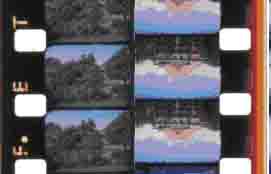 A
hypothetical Double 35mm system [image on the right] would have
worked on the same principle. Instead of exposing half the width
of a 16mm strip, the camera would expose smaller frames on one
portion of a 35mm strip before exposing the remaining area during
a second pass. In theory, it would have delivered four times
as many images from the same amount of film stock. For budget
conscious movie users, the savings would have been substantial,
particularly at a time when the cost of film and processing
represented a significant barrier to amateur filmmaking.
A
hypothetical Double 35mm system [image on the right] would have
worked on the same principle. Instead of exposing half the width
of a 16mm strip, the camera would expose smaller frames on one
portion of a 35mm strip before exposing the remaining area during
a second pass. In theory, it would have delivered four times
as many images from the same amount of film stock. For budget
conscious movie users, the savings would have been substantial,
particularly at a time when the cost of film and processing
represented a significant barrier to amateur filmmaking. 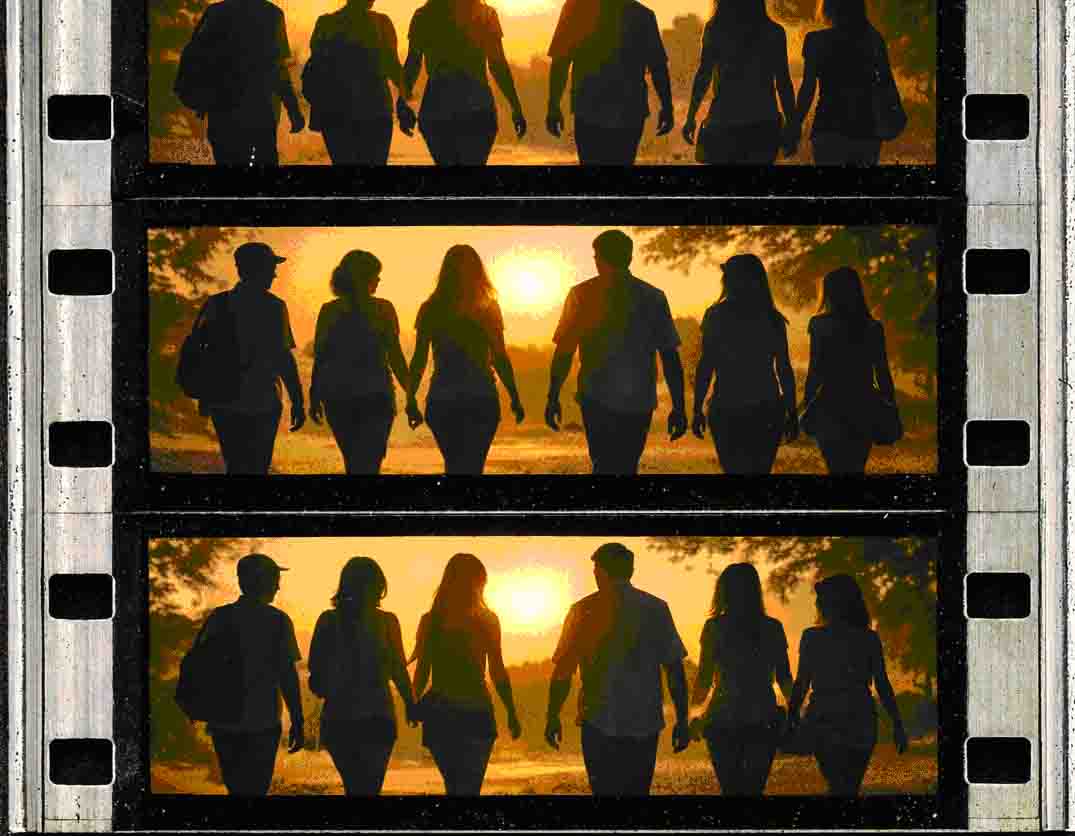
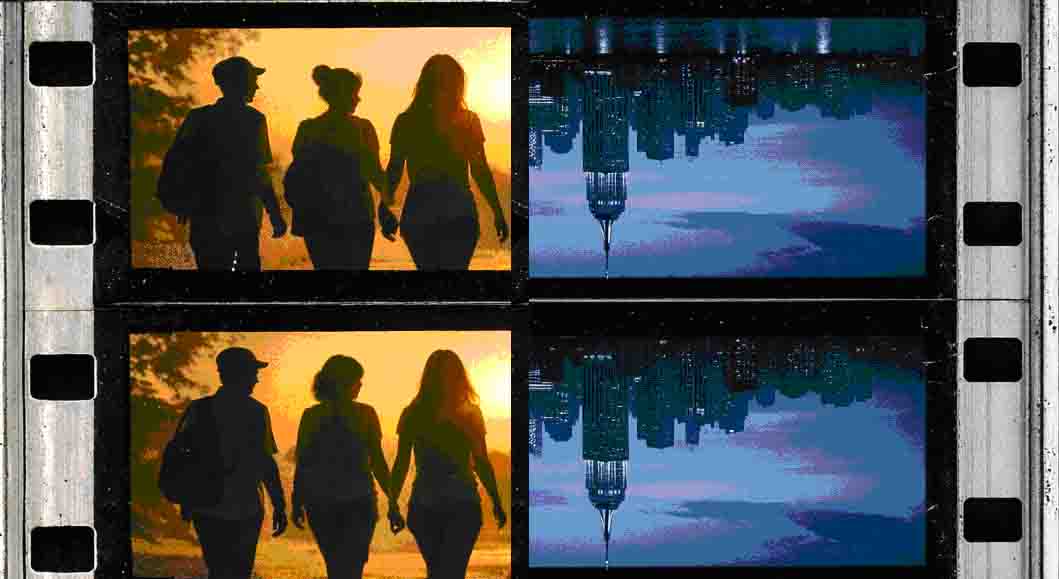
 When
discussions turn to professional 16mm cameras, they almost always
revolve around the Arriflex SR line or the Aaton models. The
Éclair ACL, however, tends to be left out of the conversation.
That has always struck me as a bit unfair, because I believe
it is a camera that deserves far more recognition than it usually
gets.
When
discussions turn to professional 16mm cameras, they almost always
revolve around the Arriflex SR line or the Aaton models. The
Éclair ACL, however, tends to be left out of the conversation.
That has always struck me as a bit unfair, because I believe
it is a camera that deserves far more recognition than it usually
gets.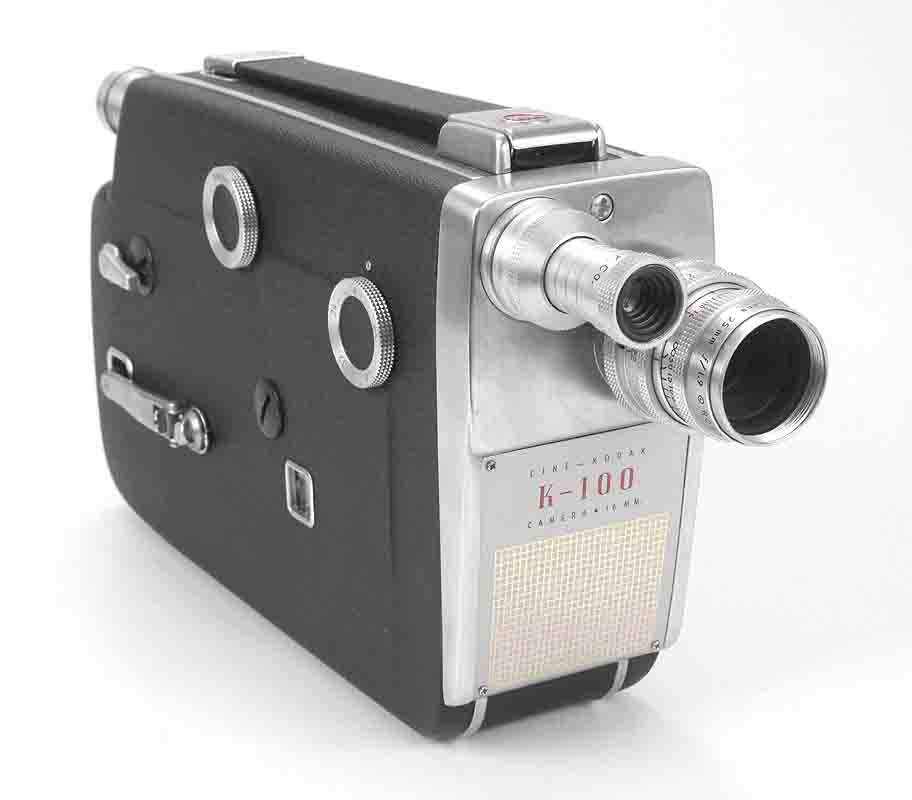 Kodak
is famous for its film stock which has been the gold standard
of celluloid for generations, but it's not really a company
people associate with exceptional cameras. If anything, a lot
of Kodak cameras, especially in the Super 8 world, are fairly
basic and gimmicky often considered a bit naff; designed for
home movies rather than serious filmmaking, almost all are built
as cheap accessible and consumer-friendly, rather than being
refined or inspiring tools.
Kodak
is famous for its film stock which has been the gold standard
of celluloid for generations, but it's not really a company
people associate with exceptional cameras. If anything, a lot
of Kodak cameras, especially in the Super 8 world, are fairly
basic and gimmicky often considered a bit naff; designed for
home movies rather than serious filmmaking, almost all are built
as cheap accessible and consumer-friendly, rather than being
refined or inspiring tools. 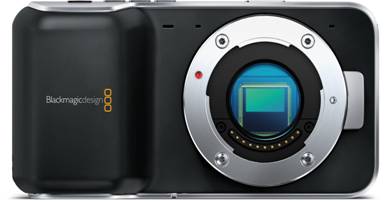


 I
don't normally talk about 8mm cameras, or use them, but this
one looks funky, I have never seen a movie camera like this
apart from modern digital cameras., it's definitely a very different
design and it looks like a stills camera. Apparently the images
it produces are incredibly steady, but obviously the images
won't be as sharp as 16mm, as four of these little 8mm frames
fit in a single 16mm frame, though 8mm does have a certain charm.
For those who don't know 8mm film [not Super 8] is actually16mm
film which is double perfed and has more perfs, it comes on
little daylight spools containing 25ft of film, in reality there's
a bit extra, upto 35ft of film. It has always bothered me that
most Regular/Standard 8 cameras don't have obvious film loops
or a sprocket drive, the claw does all the work.
I
don't normally talk about 8mm cameras, or use them, but this
one looks funky, I have never seen a movie camera like this
apart from modern digital cameras., it's definitely a very different
design and it looks like a stills camera. Apparently the images
it produces are incredibly steady, but obviously the images
won't be as sharp as 16mm, as four of these little 8mm frames
fit in a single 16mm frame, though 8mm does have a certain charm.
For those who don't know 8mm film [not Super 8] is actually16mm
film which is double perfed and has more perfs, it comes on
little daylight spools containing 25ft of film, in reality there's
a bit extra, upto 35ft of film. It has always bothered me that
most Regular/Standard 8 cameras don't have obvious film loops
or a sprocket drive, the claw does all the work. camera and many people love these cameras, but at the same time
many dislike them. The main issue is that they have not been
made equally, as such they don't adhere to the same strict tolerances,
and this means you might get a good one that works brilliantly,
or you might get a 'dud' that is plagued with issues. I personally
don't encourage people to buy the K-3, it's just that there
are much better cameras out there and the K-3 might end up giving
you endless problems. Over the years I have had three K-3's
and all three have had major issues that couldn't be fixed so
in the end I was forced to give up on them.
camera and many people love these cameras, but at the same time
many dislike them. The main issue is that they have not been
made equally, as such they don't adhere to the same strict tolerances,
and this means you might get a good one that works brilliantly,
or you might get a 'dud' that is plagued with issues. I personally
don't encourage people to buy the K-3, it's just that there
are much better cameras out there and the K-3 might end up giving
you endless problems. Over the years I have had three K-3's
and all three have had major issues that couldn't be fixed so
in the end I was forced to give up on them. I
think the issue of alignment has to be the main culprit, because
Polachrome is incredibly thin, it's flimsy and therefore it's
difficult to keep flat, so there is a strong possibility that
there was bowing in the camera during exposures and of course
during scanning, especially since the black and white film has
to be completely flat against a filter during the exposure.
I will try again with a new holder for scanning, but if the
film was not completely flat during exposure getting colour
is going to be impossible. The exampl,e on the left is one of
the better ones.
I
think the issue of alignment has to be the main culprit, because
Polachrome is incredibly thin, it's flimsy and therefore it's
difficult to keep flat, so there is a strong possibility that
there was bowing in the camera during exposures and of course
during scanning, especially since the black and white film has
to be completely flat against a filter during the exposure.
I will try again with a new holder for scanning, but if the
film was not completely flat during exposure getting colour
is going to be impossible. The exampl,e on the left is one of
the better ones.


 Using
black and white film to create colour images! Is it even possible?
Using
black and white film to create colour images! Is it even possible?
 A
New Twist on Tradition [Revised November 2021]
A
New Twist on Tradition [Revised November 2021].jpg) When
we think of Kodak [well for those who do] we don't think
much about Kodak cameras, we hear and read great things
about their film stocks; both in still photography and as
motion picture film, their film is the best and still beats
many of our current digital image capturing technologies,
I don't think there's anyone out there who'd disagree, but
there cameras ae not held up in such high esteem. About
a year ago I got hold of an old Cine Kodak Model BB Junior
16mm camera from 1929; it was immaculate and ran flawlessly,
almost as quiet as a modern sync camera, it got me thinking
about Kodak cameras, their philosophy has always been about
ease and this small 16mm camera was definitely easy to use,
but at the same time it felt extremely well made, I have
used many of Kodak's Super 8 cameras and I never got the
same feeling, I think many will agree that most Kodak Super
8 cameras aren't anything special. Unfortunately I didn't
use the BB and sold it to a collector, but I learned from
collectors and technicians that before the 1960's Kodak
made very good cameras, they were well designed, well engineered
and manufactured and they ran very smoothly, the fact that
a camera from the 1920's runs perfectly is testimony to
this. This started a sort of a chain reaction as I started
looking at other Kodak 16mm cameras.
When
we think of Kodak [well for those who do] we don't think
much about Kodak cameras, we hear and read great things
about their film stocks; both in still photography and as
motion picture film, their film is the best and still beats
many of our current digital image capturing technologies,
I don't think there's anyone out there who'd disagree, but
there cameras ae not held up in such high esteem. About
a year ago I got hold of an old Cine Kodak Model BB Junior
16mm camera from 1929; it was immaculate and ran flawlessly,
almost as quiet as a modern sync camera, it got me thinking
about Kodak cameras, their philosophy has always been about
ease and this small 16mm camera was definitely easy to use,
but at the same time it felt extremely well made, I have
used many of Kodak's Super 8 cameras and I never got the
same feeling, I think many will agree that most Kodak Super
8 cameras aren't anything special. Unfortunately I didn't
use the BB and sold it to a collector, but I learned from
collectors and technicians that before the 1960's Kodak
made very good cameras, they were well designed, well engineered
and manufactured and they ran very smoothly, the fact that
a camera from the 1920's runs perfectly is testimony to
this. This started a sort of a chain reaction as I started
looking at other Kodak 16mm cameras. 
 The
110 format has always been dubbed as sub-standard and as
such it has been looked down upon, much smaller than 35mm,
it's obvious the quality would be less, it'is known as the
poor relative to 35mm. In its heyday it was characterised
with inferior cameras and film stocks that appealed to the
average consumer because they were cheap, stylish and most
of all offered greater convenience. The 110 frame is 13mm
x 17mm, it's bigger than the Super 16's frame size which
is much smaller at 7.41mm x 12.52mm, yet Super 16 is not
considered poor quality; instead Super 16 imagery is always
referred being as being alive, organic and immensely rich
in texture that evokes a creative but realistic atmosphere.
I have been trying to understand why 110 is labelled as
inferior, clearly most 110 cameras were cheaply made and
used very grainy primitive colour negative film and had
inferior [most likely plastic] lenses, it wasn't like these
point and shoot 110 cameras with such plastic lenses would
have given the high end image quality that we would expect
from a Zeiss lens. On the other hand Super 16 cameras were
manufactured to very high standards and cost thousands and
their lenses are meticulously built too, adding to that
the Super 16 scanners are so well engineered that they extract
every last detail out of that tiny Super 16 frame. I suppose
there is also a difference in perception of detail and sharpness
in projected film versus a printed still. Due to the randomness
of the grain structure on film there will be variation in
what parts of the image are being resolved with greater
detail or sharpness from frame to frame. Projected Super
16 film will always be 'perceived' as having more detail
than a still frame from that same scene as the brain sort
of compiles the details from the different frames into a
perceived image that is resolved with greater detail.
The
110 format has always been dubbed as sub-standard and as
such it has been looked down upon, much smaller than 35mm,
it's obvious the quality would be less, it'is known as the
poor relative to 35mm. In its heyday it was characterised
with inferior cameras and film stocks that appealed to the
average consumer because they were cheap, stylish and most
of all offered greater convenience. The 110 frame is 13mm
x 17mm, it's bigger than the Super 16's frame size which
is much smaller at 7.41mm x 12.52mm, yet Super 16 is not
considered poor quality; instead Super 16 imagery is always
referred being as being alive, organic and immensely rich
in texture that evokes a creative but realistic atmosphere.
I have been trying to understand why 110 is labelled as
inferior, clearly most 110 cameras were cheaply made and
used very grainy primitive colour negative film and had
inferior [most likely plastic] lenses, it wasn't like these
point and shoot 110 cameras with such plastic lenses would
have given the high end image quality that we would expect
from a Zeiss lens. On the other hand Super 16 cameras were
manufactured to very high standards and cost thousands and
their lenses are meticulously built too, adding to that
the Super 16 scanners are so well engineered that they extract
every last detail out of that tiny Super 16 frame. I suppose
there is also a difference in perception of detail and sharpness
in projected film versus a printed still. Due to the randomness
of the grain structure on film there will be variation in
what parts of the image are being resolved with greater
detail or sharpness from frame to frame. Projected Super
16 film will always be 'perceived' as having more detail
than a still frame from that same scene as the brain sort
of compiles the details from the different frames into a
perceived image that is resolved with greater detail. .jpg) I
have just managed to get the Pan Focus 18mm, the only lens
from the Pentax 110 series that I didn't have, the lens
has come with the little Pentax Auto camera, ironically
the camera works. I think I have an old cartridge lying
around somewhere and I am curious to use the camera and
am preparing myself to embrace the challenges of re-spooling
and loading the 110 cartridges. I have been watching Youtube
videos on re-loading 110 cartridges and I'm am thinking
of loading some Vision 3 50D to see how it turns out, of
course the images won't be like the larger 35mm, but the
Pentax Auto is one of the best 110 cameras ever made, I
know the lenses are extremely good and Vision 3 50D in 16mm
is excellent, all this coupled with professional developing
and scanning should make my 110 adventures very interesting.
I
have just managed to get the Pan Focus 18mm, the only lens
from the Pentax 110 series that I didn't have, the lens
has come with the little Pentax Auto camera, ironically
the camera works. I think I have an old cartridge lying
around somewhere and I am curious to use the camera and
am preparing myself to embrace the challenges of re-spooling
and loading the 110 cartridges. I have been watching Youtube
videos on re-loading 110 cartridges and I'm am thinking
of loading some Vision 3 50D to see how it turns out, of
course the images won't be like the larger 35mm, but the
Pentax Auto is one of the best 110 cameras ever made, I
know the lenses are extremely good and Vision 3 50D in 16mm
is excellent, all this coupled with professional developing
and scanning should make my 110 adventures very interesting.


 I
have come across some very interesting lenses that should work
beautifully for Super 16, though they are originally for the Pentax
110 system and date from the late 1970's to the mid 1980's, because
they are over 30 years old these lenses are often described by
many as vintage lenses, but they give very sharp images that don't
really have that 'old worldly' look that we often see with images
taken by other vintage lenses. They are unlike any lenses that
I've used like the Switars and are capable of producing very strong
contemporary looking imagery.
I
have come across some very interesting lenses that should work
beautifully for Super 16, though they are originally for the Pentax
110 system and date from the late 1970's to the mid 1980's, because
they are over 30 years old these lenses are often described by
many as vintage lenses, but they give very sharp images that don't
really have that 'old worldly' look that we often see with images
taken by other vintage lenses. They are unlike any lenses that
I've used like the Switars and are capable of producing very strong
contemporary looking imagery.  To
get the best out of these lenses I made a unique c mount adaptor
with an iris control so I could have more control by setting the
aperture manually.
To
get the best out of these lenses I made a unique c mount adaptor
with an iris control so I could have more control by setting the
aperture manually. 